Festivals
A state-organised festival is a different product from a living one
Curated events with fixed dates and ticketed access make a region legible to visitors, and what they gain in convenience they lose in context.
By Pranav Kulkarni4 min read

Two things called by the same word
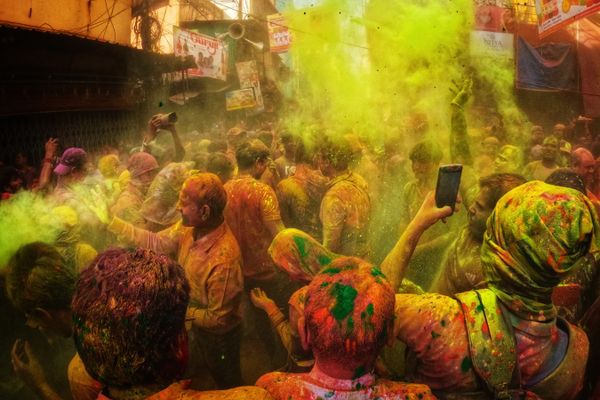
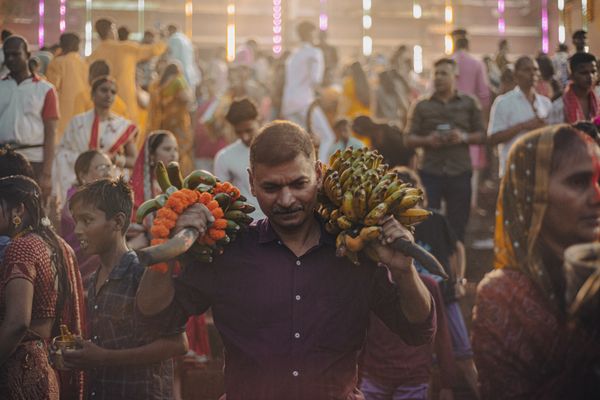
Some Indian festivals exist because a community observes them, on dates its calendar determines, in the places where its people live. Others are organised by a state government or a tourism department, held annually on announced dates at a purpose-built venue, and designed substantially so that visitors can attend.
Both get described as festivals and the difference is rarely spelled out, which leads to a certain amount of disappointment in both directions. Someone expecting a curated programme at a village observance will find no schedule and no seating. Someone expecting an authentic encounter at an organised event will find a stage, a timetable and a ticket counter.
Neither of these is a criticism. They are different things with different purposes, and knowing which one you have booked is most of what a traveller needs to get out of it.
What the organised version does well
The Hornbill Festival in Nagaland, held annually in the first part of December at a site outside Kohima, is the clearest example. Communities from across the state participate at a single venue, with performances, crafts, food and competitions, over a fixed run of days announced well in advance.
For a visitor this solves several genuine problems at once. Nagaland is a state where the communities are numerous and dispersed, the roads are slow, and reaching individual villages during their own observances would take weeks and a good deal of local contact. The festival compresses an enormous amount of it into one accessible place and a known set of dates.
The Rann Utsav in Kutch works on a different model with a similar logic: a seasonal tent settlement near the salt flats, running through the cooler months, providing accommodation and organised access in a place where independent infrastructure is thin. Without it, a large share of the people who visit the white desert would not manage the trip at all.
What it necessarily loses
The criticism, which is made seriously and is worth taking seriously, is that presenting a culture on a stage changes it. Performances are shortened and scheduled, elements that photograph well are emphasised, and a practice that had a season, a place and a reason within community life is repeated on demand for an audience.
There is a counter-argument, also made by people with standing to make it, that these events have supported crafts and performance traditions that were declining, generated income that stays in the region, and given younger participants a reason to learn things they might otherwise not have. Both of these can be true at once, and largely are.
The honest position for a visitor is not to resolve that debate but to be clear-eyed about what is on offer. You are watching a presentation of a culture, arranged by people from that culture, for an audience that includes you. That is a real and interesting thing. It is not the same as being present at an observance.
The practical consequences of fixed dates
Organised festivals concentrate demand into a narrow window in places with limited capacity, and the effect is severe. Accommodation in and around the host town is booked out months ahead, road transport is stretched, and prices in the surrounding area rise for the duration.
Because the dates are announced rather than calculated, planning is at least straightforward. The dates are published, they recur in broadly the same part of the year, and the booking of both travel and rooms should start as soon as they are confirmed rather than when the trip feels imminent.
Where a permit is required to enter the state or the area, the festival period is the worst possible time to be handling it late, since the offices concerned are dealing with a surge. That is an argument for starting the paperwork well before it feels urgent, and for confirming the current requirements rather than assuming last year’s.
Getting more out of either kind
One approach that consistently works is to treat the organised festival as an introduction rather than the whole trip. Attend it, then spend the following week travelling in the region at ordinary speed, where the same crafts, foods and communities exist in their normal context and nobody is on a stage.
The reverse also works. Spend time in a region first, learn a little about who is who and what is made where, and the presentation at the festival stops being a blur of unfamiliar costume and becomes legible. Context makes the curated version considerably more interesting.
And if the aim is specifically to attend a living observance rather than a produced one, that is achievable too, with more effort: it takes local contact, flexibility about dates that are set by a calendar rather than a committee, and a willingness to be a quiet guest rather than an audience.
Common questions
Are organised festivals worth attending?
For most visitors, yes, particularly in regions that are otherwise hard to travel in. They compress a great deal into a short time and they are genuinely enjoyable. The reasonable caveat is to understand that you are seeing a presentation rather than a private observance.
How far ahead should I book for one?
As soon as the dates are announced, especially for accommodation near the venue. These events take place in towns with limited room stock, and the shortage is acute rather than a matter of paying more.
Do I need a permit to attend?
It depends on the state and on your nationality, and the requirements change. Where an entry permission applies, apply early rather than during the festival rush, and confirm the current rules through the official channel before making travel bookings.
Editor, Traveology
Pranav writes the explanatory pieces on states, hills, coast & islands and reads the small print so you do not have to.