Trains & Permits
A large Indian station holds facilities most travellers never find
Cloakrooms, retiring rooms, waiting halls tied to your ticket and a working enquiry system exist at major stations, and knowing about them changes what a long layover feels like.
By Radhika Iyer3 min read
The station was designed for people who wait
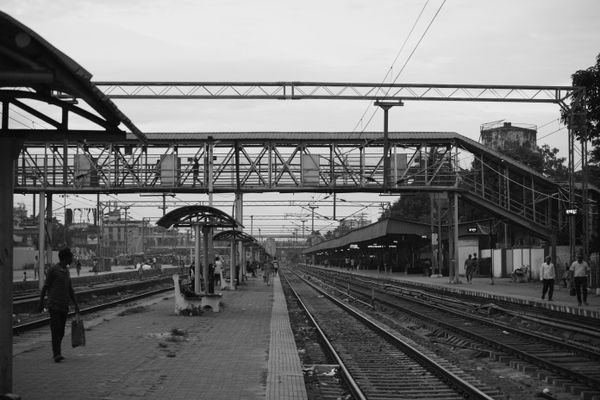
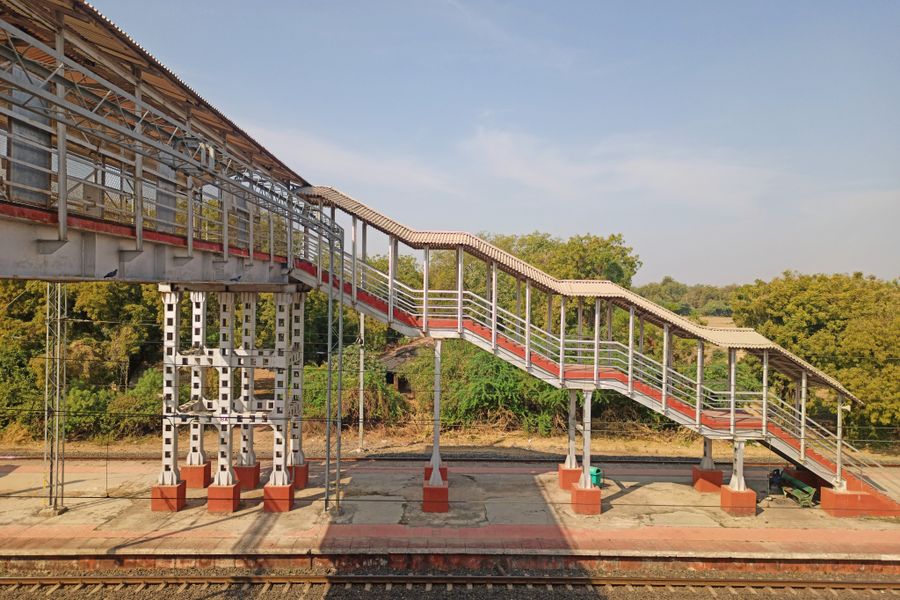
Indian railway stations were built in an era when journeys took days, connections were long and passengers needed somewhere to be for hours at a time. That assumption is still embedded in the buildings, which contain facilities a modern airport-trained traveller does not think to look for.
The result is that a six-hour gap between trains at a large junction is a manageable situation rather than an ordeal, provided you know what is available. Most of it is signposted, though not always prominently and not always in English, and the facilities are usually clustered rather than scattered.
None of this is uniform. A major terminus is a different proposition from a small-town station with a single platform, and the quality of any given facility varies with the station and its management. What follows is what tends to exist, not a guarantee about a particular place.
The cloakroom solves the luggage problem
Most sizeable stations have a cloakroom where luggage can be left for a period, usually charged by the piece and by time, generally requiring that the bag be locked and that you hold a valid ticket. It is the facility that turns a long layover into a free afternoon in the city.
The practicalities are worth knowing in advance. Bags must normally be lockable and are refused if they are not, the receipt is what gets your luggage back and losing it is a genuine problem, and the operating hours and charges are set locally and revised. Ask at the station rather than relying on an old figure.
Some stations also have automated lockers, and the larger cities have private left-luggage services near the station. Where the official cloakroom has a long queue, those alternatives can be quicker, though the usual caution about leaving valuables anywhere applies.
Waiting rooms are graded by ticket
Stations typically provide separate waiting areas by class, with upper-class and air-conditioned rooms accessible to passengers holding the corresponding ticket, alongside general waiting halls and, in most places, a separate women’s waiting room. Access is checked at the door in the better-run stations.
These rooms usually include washrooms and sometimes shower facilities, which after a long overnight journey is a more valuable amenity than it sounds. Availability of hot water and the general condition are entirely dependent on the station, and they vary from excellent to grim.
Retiring rooms are the next step up: actual bedrooms, single or shared, bookable by passengers with a confirmed ticket for a limited period, at rates set by the railways. In a city where you arrive at three in the morning, they are an extremely practical option and they are booked well in advance for exactly that reason.
Information is available if you ask the right desk
Every large station has an enquiry counter, and there are also public information displays, announcements in several languages and increasingly reliable digital sources for running position and platform allocation. Platform numbers do change late, and the announcement is generally the first place the change appears.
The staff to ask depend on the question. Reservation and cancellation belong to the reservation office, which is often a separate building; current running and platforms belong to enquiry; and anything involving an onboard problem belongs to the ticket examiner on the train rather than to anyone on the ground.
There is also a formal complaint and assistance mechanism operated by the railways, covering safety, cleanliness, medical help and security while travelling. It exists, it is publicised on the trains and platforms, and the current contact details are displayed rather than being something to memorise from an article.
Getting through a long layover comfortably
The pattern that works is straightforward: check the running position of the onward train before committing to anything, put the luggage in the cloakroom, keep valuables and documents with you, and set a return time that assumes the cloakroom queue will be longer coming back than going.
For an overnight gap, a retiring room booked in advance beats sitting in a waiting hall by a distance, and a modest hotel near the station is the fallback. Stations in large cities are usually surrounded by inexpensive accommodation, with the quality varying as much as the price does.
One habit is worth adopting generally. Find the platform, the waiting room and the exit when you arrive rather than when you are in a hurry, because a large Indian junction at departure time is not the place to start orienting yourself with a heavy bag.
Common questions
Can I leave luggage at any station?
Cloakrooms exist at most sizeable stations but not at every halt, and they generally require a valid ticket and a lockable bag. Hours and charges are set locally and change, so confirm at the station itself rather than relying on a figure quoted elsewhere.
Who can use the air-conditioned waiting room?
Normally passengers holding a ticket in the corresponding class or above, checked at the entrance in better-run stations. General waiting halls are open to all ticketed passengers, and most stations also maintain a separate women’s waiting room.
Are retiring rooms worth booking?
For an early arrival, a late departure or a long gap between trains, very much so — they are inside the station, priced by the railways and require a confirmed ticket. They are also limited in number and go early, so they need booking in advance rather than on arrival.
Reporter, Traveology
Radhika has written about states, hills, coast & islands for most of the last decade and is happiest when a piece answers the question completely.