Trains & Permits
Crossing a big Indian city is a choice between four different systems
Metro rail, suburban trains, auto-rickshaws and app cabs each solve a different part of the urban journey, and the right answer changes with the distance, the hour and the city.
By Nadia Haddad3 min read
Urban distance is measured in time and the time varies wildly
A cross-city journey in a large Indian city can take twenty minutes or two hours depending entirely on when it is attempted. Peak-hour traffic in the major metros is severe and predictable, which means the same trip has two completely different answers depending on the clock.
That variance is why the choice of mode matters more here than in a smaller city. Anything on rails is unaffected by road congestion; anything on wheels is entirely governed by it. Every urban transport decision in India reduces to that distinction.
The corollary is that a journey which must happen at a fixed time — a flight, a train, an appointment — should use rail if rail goes there, and should leave absurdly early if it does not.
Metro systems have changed the equation in the big cities
Several Indian cities now have metro networks of real extent, with Delhi’s the largest and systems operating in Mumbai, Bengaluru, Chennai, Kolkata, Hyderabad and a growing list of others. Where the metro goes, it is generally the fastest and most predictable way to cross a city.
The systems are air-conditioned, signed in English as well as the local language, and use tokens or cards depending on the city. Security screening at entry is standard and adds a few minutes. Women-only coaches operate on several networks and are clearly marked.
The limitation is coverage. A metro line goes where it goes, and the last stretch from a station to a destination is often a distance that still needs an auto or a walk. For journeys that are metro for most of the way, that is a small price; for journeys perpendicular to the lines, the metro may not help at all.
Suburban rail is its own institution, particularly in Mumbai
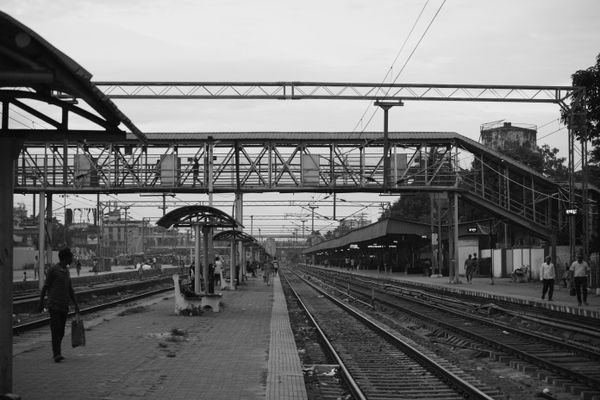
Mumbai’s suburban network carries an extraordinary number of passengers daily and is the backbone of the city in a way no other Indian urban rail system is. Kolkata, Chennai and Delhi have suburban services of their own with different characters.
For a visitor, the Mumbai locals are simultaneously the fastest way along the city’s length and the most intimidating thing in Indian urban transport. Peak-hour crowding is extreme, boarding and alighting are done at speed, and standing near the doors is the norm rather than an accident.
Off-peak, the same trains are entirely manageable and a genuinely good way to see the city. First class and women’s compartments exist and are worth using. The general advice is straightforward: avoid the peak direction at the peak hour unless you specifically want the experience.
Autos and app cabs solve different problems
The auto-rickshaw is the short-hop vehicle. It gets through traffic that a car cannot, it goes down lanes a car cannot enter, and it is the natural choice for a couple of kilometres. Metered fares are the legal position in most cities and the reality varies, with app-based auto booking now common and generally simpler than negotiating.
App cabs cover the longer, air-conditioned, door-to-door journey and are widely available in the larger cities. Their weakness is the same as any car’s — they sit in the same traffic as everything else — and in peak hours or heavy rain, availability drops precisely when demand rises.
Prepaid taxi counters at airports and major stations remain a useful fallback, particularly when arriving late or when phone connectivity is not sorted. They fix the price at a counter before you get in, which removes the negotiation entirely.
Building a workable urban plan
The approach that works is to think in legs rather than in journeys. Metro or suburban rail for the long axis, an auto for the last stretch, a cab when the load or the hour makes it worth it, and walking for anything under a kilometre, which in a dense Indian city is frequently the fastest option of all.
Timing beats mode selection. Moving across a city between the peaks turns a difficult journey into an easy one, and any itinerary that puts a cross-city transfer at half past nine in the morning is making trouble for itself.
Fares, routes, operating hours and the rules on things like women-only coaches vary by city and change as networks expand, so the current position with the local operator is the thing to check. The structure, though, is broadly consistent across the metros, and once it is understood in one city it transfers reasonably well to the next.
Common questions
Is the metro a good option with luggage?
For a moderate bag, usually yes, and it is often much faster than a road transfer to a station or airport. With several large cases it becomes awkward, since stations involve stairs, gates and security screening, and peak-hour carriages leave no space. Some systems restrict large baggage.
Should I use a meter or negotiate with an auto?
Metered fare is the legal position in most cities and app-based booking has made the question largely academic where it is available. Where you must negotiate, agreeing the price before getting in avoids the argument at the end, and asking a local what a trip should cost gives you a reference point.
Are the Mumbai local trains worth trying as a visitor?
Off-peak, yes — they are fast, cheap and the best possible view of how the city works. At peak hour in the peak direction the crowding is genuinely extreme and boarding is physical. If you try it, travel light, know your station and stand clear of the door crush.
Contributing editor, Traveology
Nadia writes about states, hills, coast & islands, mostly the parts other people skip and prefers a plain explanation to a clever one.