Trains & Permits
India’s travel calendar is set by school terms and wedding dates
Domestic demand moves in a pattern that has nothing to do with the tourist season, and knowing when the country itself is travelling explains most price spikes and sold-out weeks.
By Manish Trivedi3 min read
Most people moving around India are not tourists
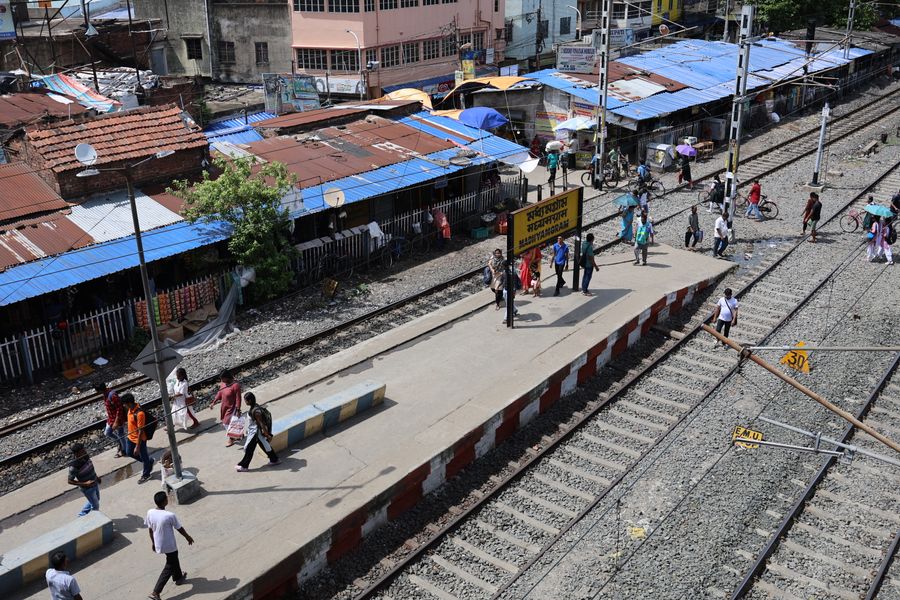
The overwhelming majority of travel inside India is domestic and a great deal of it is not leisure at all — it is people going home, going to a wedding, taking a child to an exam centre, visiting a hospital or moving for work. Foreign visitors are a small fraction of the load on any given train.
That matters because pricing and availability respond to the whole of that demand, not to the part of it that reads travel articles. A week that looks unremarkable on a tourism calendar can be the hardest week of the year to book a berth on a particular route.
So the useful question when planning is not when the weather is best. It is when the country is on the move, and the answer is driven by school terms, examinations and the marriage calendar.
Summer holidays are the biggest domestic season
School holidays across most of India fall in the hottest months, roughly from the latter part of April into June depending on the state and the board. This is when families travel, and it is why hill stations are unbearable in May while the weather down below is at its worst.
The effect is not confined to hill towns. Long-distance trains fill weeks ahead in this period because it is also when people travel to home towns, and the popular leisure destinations run at their annual peak on price and occupancy simultaneously.
The corollary is useful. Immediately after schools reopen, the same places empty out considerably even though the weather has barely changed, and the last week of the holidays is a noticeably worse time to travel than the first week after them.
Exam season empties some places and fills others
Board examinations and the large competitive entrance tests take place mainly in the first months of the year, and they exert an odd double pull. Families with children in those years stop travelling entirely, which softens leisure demand. Meanwhile candidates and parents travel to examination centres, which loads specific routes and fills hotels in specific towns.
A district town hosting an examination centre can be fully booked on those dates for reasons that appear nowhere in any tourism listing. If a small-town hotel search returns nothing on an otherwise ordinary weekend, this is one of the likelier explanations.
The period does have a compensating advantage. The weeks before the summer holidays begin are often excellent value at leisure destinations, with reasonable weather in much of the country and the domestic family market entirely absent.
The wedding calendar takes rooms, roads and staff
Hindu weddings are held on dates considered auspicious, and those dates cluster into particular months, with a large concentration in the cooler part of the year and further clusters at other points in the calendar. There are also periods when very few weddings take place at all.
On a heavy date the effect on a town is comprehensive. Hotels are taken as blocks rather than as individual rooms, banquet spaces run through the night, traffic is disrupted by processions, and the vehicles and staff a visitor might have hired are working the wedding instead.
This is most acute in the smaller cities and in the states where large weddings are the norm. In a metro it is background noise. In a Rajasthan or Punjab district town on a peak date it can mean there is genuinely nowhere to stay.
Long weekends and festival weeks compress everything
India has a considerable number of public holidays, and a good share of them move with the lunar calendar, so the long weekends they create fall differently each year. When a holiday lands adjacent to a weekend, demand on trains, flights and hotels concentrates violently into those few days.
The pattern is entirely predictable once you look. Traffic leaving the big cities on the evening before is severe, the destinations within a few hours’ drive fill up, and the return on the final evening is worse than the outbound.
The practical approach is to look at the actual holiday calendar for the year of travel rather than assuming, since the dates shift, and to decide deliberately. Travelling on a long weekend is a choice with a known cost. Travelling into one by accident is the version that ruins a trip, and it happens to people who planned around the weather alone.
Common questions
When is the cheapest time to travel domestically in India?
Broadly, the periods that are neither school holidays nor festival weeks nor heavy wedding dates — which in much of the country means parts of the monsoon and the weeks immediately after the summer holidays end. The weather is the trade-off, and in some regions it is a good one.
How do I find out if a wedding season is on?
Auspicious dates are published in almanacs and widely known locally, and hotels will usually tell you plainly if you ask whether a date is a wedding date. A sudden shortage of rooms in an otherwise quiet town during the cool months is a strong signal.
Do public holidays fall on the same dates each year?
Some do and many do not. Festivals following lunar or lunisolar calendars shift, so the long weekends they create move from year to year. Several holidays are also declared by individual states rather than nationally, which means the calendar differs depending on where you are.
Consumer editor, Traveology
Manish covers states, hills, coast & islands and the questions readers actually send in and reads the small print so you do not have to.