Coast & Islands
Reaching an Indian island is a capacity problem before it is a permit problem
The Andamans and Lakshadweep are governed differently, sit in different seas and share one constraint: there are only so many seats, berths and beds.
By Pranav Kulkarni4 min read
Two archipelagos with almost nothing in common administratively
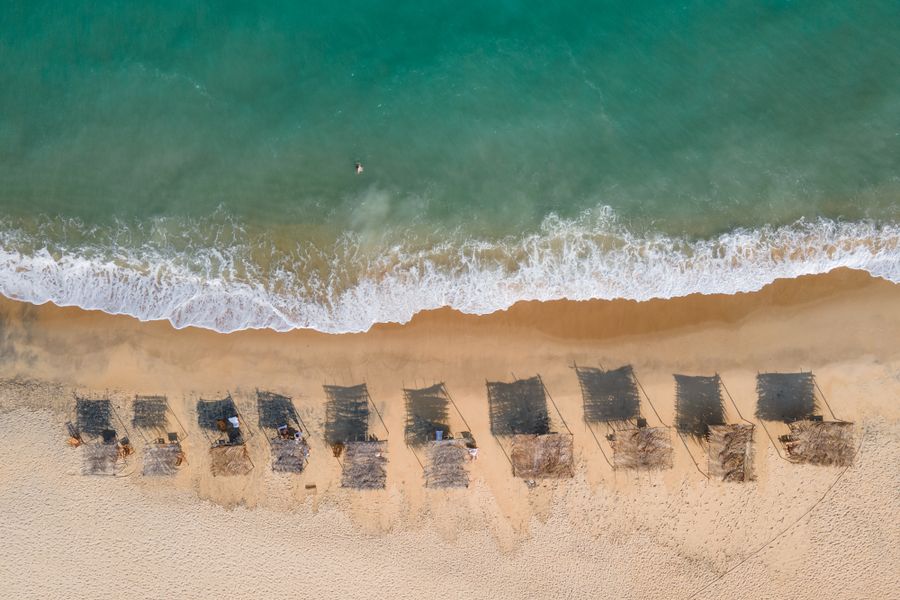
India has two island groups worth thinking about as destinations, and travellers often lump them together because they are both tropical and both offshore. They are not similar. The Andaman and Nicobar Islands lie far out in the Bay of Bengal, closer to Southeast Asia than to the Indian mainland, and are reached through Port Blair. Lakshadweep is a scatter of small coral atolls in the Arabian Sea off the Kerala coast.
Their access regimes differ substantially. Lakshadweep operates a permit system that applies to visitors generally, including Indian citizens from the mainland, and only a limited number of islands are open to tourism at all. The Andamans are more open in ordinary tourist terms, but parts of the group, including areas set aside for protected communities and the Nicobar group, are closed and enforced as such.
The details of both regimes have changed over the years and can change again, so the position here is deliberately general. Establish the current requirement for your nationality and your specific destination island from an official source before you book anything, because this is precisely the kind of rule that a two-year-old blog post gets wrong.
Capacity is the constraint people underestimate
These are small places with limited infrastructure. There are only so many flights into the relevant airfields, only so many berths on the ships, and on several islands a genuinely small number of rooms. That combination means demand is capped by supply in a way that mainland destinations rarely are.
In practical terms the popular weeks sell out months in advance rather than weeks, and the high season around the turn of the year is the extreme case. Late booking does not merely cost more; it frequently means the trip cannot happen in the form you wanted, because the seats do not exist at any price.
It also means the sequence of bookings matters. The correct order is to secure the constrained item first — the flight or the ship, and where applicable the permit — and to arrange accommodation around it, rather than booking a hotel and assuming transport will be available to reach it.
Ferries answer to the sea, not to the timetable
Within the Andamans, movement between the main islands is by sea, using a mix of government and private services on published schedules. Those schedules are real, and they are also subject to the sea state. Rough conditions lead to suspensions, and suspensions cascade because the next sailing is already full.
The sea is roughest during the southwest monsoon and around any cyclonic activity in the Bay, which affects the middle of the year most and the late-year cyclone months intermittently. Crossings that are routine in January can be cancelled for days at a stretch in July.
The mainland-to-island ship services are a separate matter again. They run infrequently, take a long time, and are booked through their own channels. They are an interesting way to travel for anyone with days to spare, but they are not a fallback for a missed flight.
The weather calendar, which is not the mainland calendar
Both groups are tropical and warm all year, so the seasonal question is about rain and sea conditions rather than temperature. The southwest monsoon affects both, with heavy rain and rough water broadly from June into September, and the Bay of Bengal group also sits in the path of the late-year cyclone season.
The reliable window for calm water and clear diving conditions is broadly the drier part of the year from around late autumn through to spring, which is also, inevitably, when everyone else wants to go. The shoulder weeks at either end are the compromise: fewer people, more chance of a day lost to weather.
Underwater visibility follows the same logic, since it depends on sediment stirred up by swell and washed off the land by rain. That is why diving operations concentrate their seasons where they do, and why a monsoon trip is a different holiday rather than a cheaper version of the same one.
What a sensible island plan looks like
Build in slack at the end. A missed ferry or a cancelled flight on a small network does not have an easy alternative, and being stuck on an island is only charming if the next commitment is a long way off. A spare day before an onward international flight is close to essential.
Take the closed areas seriously. Where access to an island or a stretch of coast is restricted, the restriction exists to protect communities who have not consented to contact, or to protect a sensitive environment, and it is enforced. There is no version of this where a boatman is doing you a favour.
Finally, carry documents and copies. Permits, identity papers and booking confirmations get checked at the airport, at the jetty and sometimes at the accommodation, and connectivity in the outer islands is not reliable enough to depend on a phone for producing them.
Common questions
Do Indian citizens need a permit for Lakshadweep?
A permit regime applies to visitors who are not residents of the islands, and that has included Indian citizens from the mainland. How it is applied for and what it covers has changed over time, so check the current process through the official channel well before you book.
Is diving possible year round?
Operations are seasonal and concentrated in the calmer, clearer months. Some centres run through parts of the wetter season when conditions allow, but visibility and sea state are both worse and cancellations are common, so a trip built around diving should target the settled window.
How far ahead should I book?
For the peak weeks around the year end, several months. For the shoulder months, a few weeks is often enough for flights but the better small properties still go early. The constrained resource is almost never the hotel room on a big island; it is the seat or the berth to get there.
Editor, Traveology
Pranav writes the explanatory pieces on states, hills, coast & islands and reads the small print so you do not have to.