Coast & Islands
The flat patch between the waves is the current that pulls people out
Rip currents form where water pushed onshore finds a channel back to sea, and they look like the calmest and most inviting part of the beach.
By Radhika Iyer4 min read
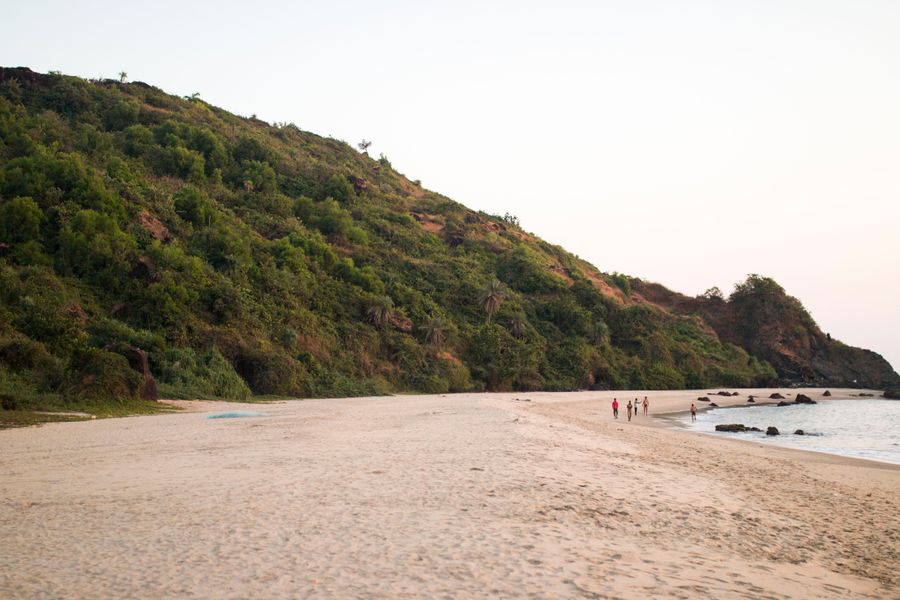
Water that comes in has to go back out
Waves breaking on a beach push a continuous volume of water up onto the shore, and that water has to return seaward. It does not return evenly across the whole beach face. It finds the path of least resistance, usually a gap or a channel in the sandbar just offshore, and flows out through it in a concentrated stream.
That stream is a rip current. It is a surface flow moving away from the beach, sometimes quite fast, confined to a channel that may be only a few metres wide. It is not a wave, it does not pull anyone under, and it is not an undertow in the folkloric sense. It is simply a river running the wrong way.
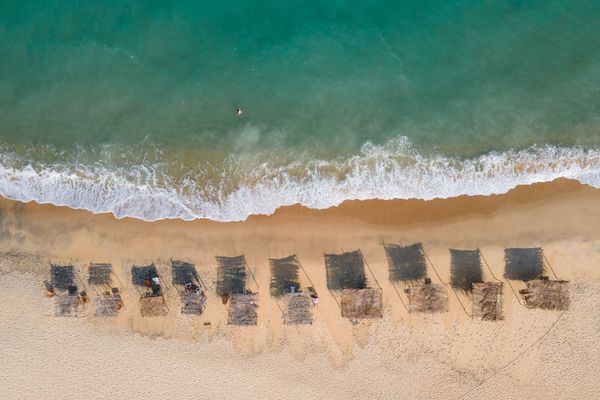
The dangerous thing about it is what it looks like. Because the water there is deeper and moving seaward, incoming waves break less over it, so the surface appears flatter, calmer and often darker than the churning white water on either side. To someone choosing where to swim, it looks like the easy option.
Where they form, and why they move
Rips are commonest where there is a break in an offshore bar, alongside any structure that interrupts the flow of water along the beach — a groyne, a jetty, a rocky outcrop — and at the ends of a beach against a headland. Anywhere the water has an obvious channel, it will use it.
They are not fixed. The bar shifts with the swell, so a rip that sat at one end of a beach in December may be in the middle of it in March, and the strength varies with tide and wave size. This is precisely why local knowledge outperforms any general description, and why the same beach can be benign one week and hazardous the next.
Big surf is not a requirement. Moderate, steady waves on a bar-and-channel beach produce perfectly serviceable rips, which is part of why people are caught out on days that do not look threatening.
Indian beaches vary enormously in what is watching you
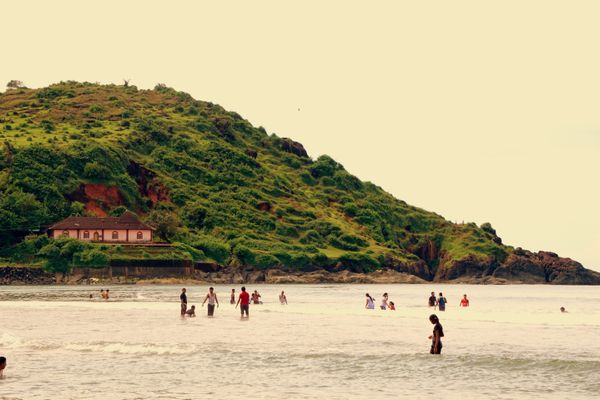
Some stretches of the Indian coast have organised lifeguard services with flagged swimming zones and daily assessments of conditions, notably where tourism is concentrated. Vast lengths of coastline have nothing of the kind, no signage, and no one on duty. The two situations demand completely different behaviour from a visitor.
A beach with no operators, no flags and nobody around is not therefore a safe beach; it is an unassessed one. The absence of a warning sign carries no information. Meanwhile a flagged zone on a busy beach represents somebody’s judgement, that morning, about where the water is currently doing something manageable.
The monsoon months intensify all of this on the west coast, where the swell is large and the sand profile is steep. Many beaches restrict or prohibit entry then, and the restrictions correspond to the season when incidents cluster.
Fighting a rip is what makes it dangerous
A rip current is not usually strong enough to be a problem on its own. What harms people is the reaction to it: realising you are being carried away from shore, turning to swim straight back, and finding that you cannot make progress against the flow. Exhaustion follows, and exhaustion in deep water is the actual hazard.
The standard advice given by beach safety services around the world is consistent and worth knowing before you need it. Do not swim directly against the flow. Stay afloat, signal for help, and where you are able to swim, move parallel to the beach to get out of the narrow channel before turning shoreward, since the current is much wider than it is long in most cases.
The other consistent finding is about rescuers. A significant share of drownings involve people who went in after someone else without a flotation aid. Throwing something that floats and calling for trained help is not timidity; it is the version of the rescue that does not produce two casualties.
River mouths and the places that are not beaches at all
Estuaries and river mouths along the Indian coast combine a tidal current with a river flow, and the direction and strength change through the day in ways that are not obvious from the bank. Sandbanks there shift constantly, so a place that was waist-deep last season may not be.
The same applies to the many coastal spots where a river meets the sea beside a temple, a ferry point or a picnic ground. These are social places rather than designated swimming ones, and the water in them behaves like a channel rather than like a beach.
None of this is an argument against swimming in the sea in India, which millions of people do safely every day. It is an argument for choosing where, asking someone local, and treating the flat, inviting patch with more suspicion than the noisy one beside it.
Common questions
How do I spot a rip from the beach?
Look for a gap in the line of breaking waves, water that appears darker or calmer than its surroundings, or a plume of churned sand and foam moving seaward. Spend a few minutes watching before entering; a rip is much easier to see from slightly elevated ground than from the water.
Are Indian beaches more dangerous than others?
The physics is the same everywhere. What differs is coverage — long stretches of coast have no lifeguard service and no signage, so the same conditions carry a higher consequence simply because nobody is watching and help is further away.
Is it safe to swim during the monsoon?
On most of the west coast, no, and many beaches formally restrict it. The swell is large, the beach profile is steep, currents are strong and rescue services often stand down. That restriction is based on where and when incidents actually happen.
Reporter, Traveology
Radhika has written about states, hills, coast & islands for most of the last decade and is happiest when a piece answers the question completely.