Festivals
A chariot festival is the one week the deity leaves the building
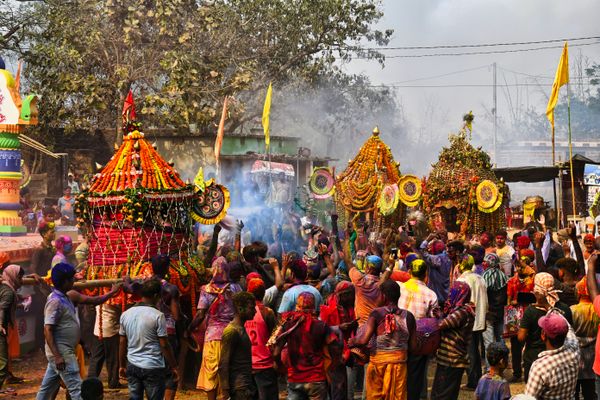
Temple car processions invert the usual arrangement by bringing the image out into the street, which is why they draw crowds far larger than any ordinary temple day and why the logistics are extraordinary.
By Pranav Kulkarni4 min read
Ordinarily you go to the deity, and for a few days the deity comes to you
The daily logic of a temple is that the image resides in a sanctum, access is controlled, and the worshipper travels inward through a sequence of enclosures to reach it. A chariot festival reverses all of that for a short period. The processional image is brought out, mounted on a wheeled vehicle and drawn through the streets by the people of the town.
That reversal is the whole significance of the event. It removes, temporarily, the distance between the sanctum and the street, and it makes the deity available to people who for reasons of custom, caste, faith or simple crowding would not otherwise stand in front of the image at all.
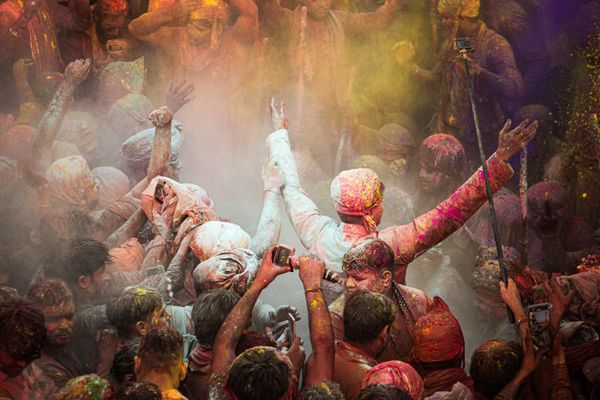
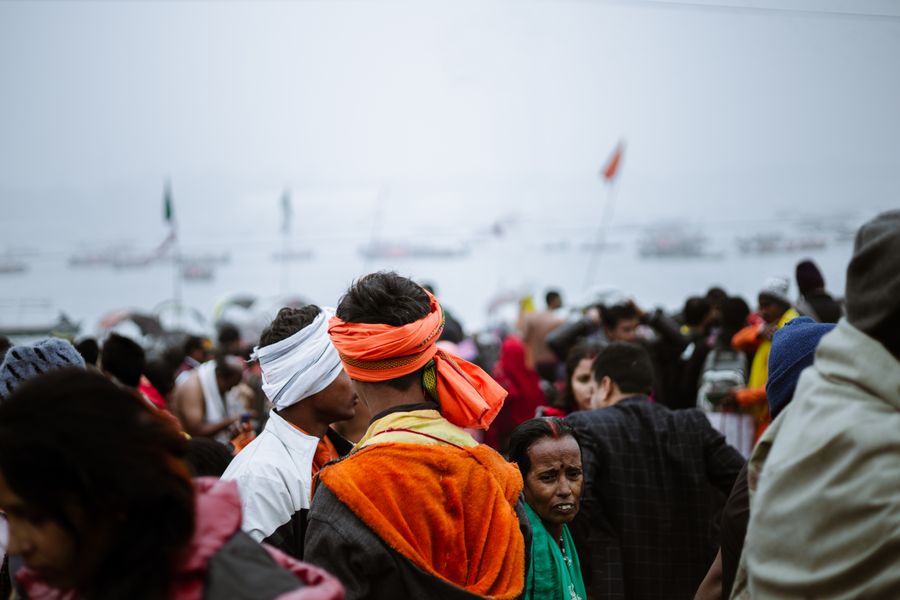
This is why the crowds at these festivals are of a different order from ordinary temple crowds. It isn’t merely that more people come, though they do. It is that the constituency changes, and a chariot procession draws the whole town rather than the congregation.
The Puri chariot festival is the largest expression of it
At Puri in Odisha the annual chariot festival moves three deities from the main temple to another temple some distance away, on three enormous wooden chariots pulled by ropes through a broad processional street. The scale of the crowd is well beyond what any ordinary Indian religious event draws.
The chariots themselves are the striking part. They are constructed afresh each year from timber, to established specifications, by hereditary carpenter families, and they are not reused — the vehicles are dismantled after the festival and the wood is put to other uses. It is a substantial construction project repeated annually.
Pulling them is the ritual act rather than an incidental means of transport. Thousands of people take the ropes, the movement is slow and uneven, and the chariots stop, restart and sometimes fail to complete the journey in a single day. Everything about the event is governed by that pace, and the administration around it — crowd routing, barriers, medical posts, timing — is a serious operation.
The southern temple car is a similar idea in a different form
Across Tamil Nadu and neighbouring regions, large temples maintain their own wooden processional cars, often kept in a shed beside the temple for most of the year. During the annual festival the car is decorated, the processional image is installed and the vehicle is drawn around the streets that surround the temple.
These streets exist for the purpose. In many southern temple towns the concentric roads around the temple complex are laid out as the processional route, which is why the plan of the town makes sense only when you see the car moving along it. The town is, in a real sense, built around this event.
Not every temple festival uses a car, and many use palanquins, mounts of various kinds and processions on foot instead. The common feature is movement — the festival is defined by the deity going somewhere, and the town’s participation is in accompanying the journey.
Being present at one requires accepting the conditions
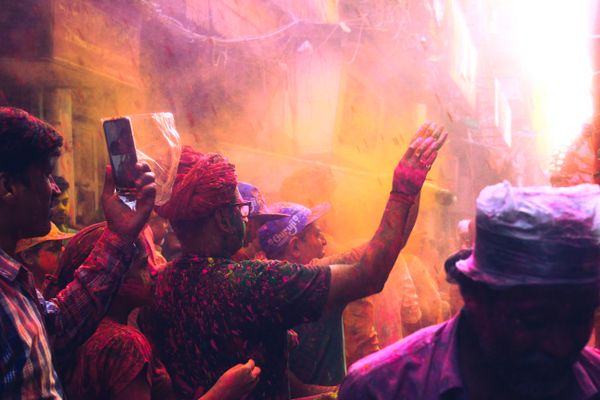
These are dense, slow, loud events in hot weather, and they run for hours. The crowd does not move at your pace and there is often no straightforward way to leave the middle of it quickly, which is the single most important thing to understand before entering one.
The practical approach is to choose the position rather than the moment. Somewhere along the route with an exit behind you, arriving early and staying put, is far better than trying to follow the chariot. Local people will tell you where the crush forms, and they are reliable on this because they have watched it happen every year.
Heat and dehydration cause more trouble at these events than anything else, and pressing into a packed crowd in the middle of the afternoon with no water is how ordinary discomfort turns into an incident. Sun, shade and a route out matter more than the view.
The etiquette is straightforward and worth observing
Photography is generally acceptable in the street but is a different question near the image, at the moment of a ritual or with people in the middle of an act of devotion. Asking, or simply not taking the picture, costs a visitor nothing.
Access rules vary. Some temples restrict entry to Hindus and the restriction is enforced at the door, though the procession itself is in the public street and open to everyone, which is part of the point of the festival. Dress conservatively, remove footwear where required, and follow whatever the people around you are doing.
Dates move with the lunar and lunisolar calendars, and the arrangements — barriers, road closures, timing of the pull, viewing arrangements — are set by the temple administration and the district authorities each year. That current information is the only useful kind, and it is issued locally rather than being available in advance from a general source.
Common questions
Can non-Hindus attend a chariot festival?
The procession takes place in public streets and is generally open to everyone, which is one of the reasons these festivals matter locally. Entry to the temple itself is a separate question, and some temples do restrict it. The restriction applies to the building, not to the street.
Why are the Puri chariots rebuilt every year?
Because the construction is itself part of the ritual, carried out by hereditary craft families to established specifications, and the chariots are dismantled afterwards rather than stored. The timber is put to other uses, and the whole cycle begins again for the following year.
How crowded do these events get?
Very, and at the largest of them the density is beyond what most visitors have experienced. Plan for the crowd rather than around it — pick a spot with an exit, arrive well before the procession, carry water, and accept that following the chariot through the streets is not realistic.
Editor, Traveology
Pranav writes the explanatory pieces on states, hills, coast & islands and reads the small print so you do not have to.