Festivals
A mela is a market before it is a spectacle
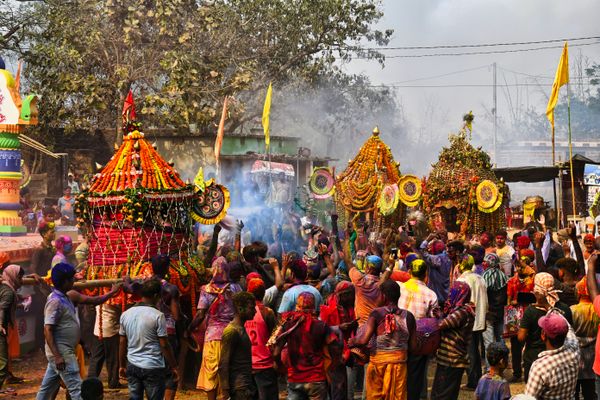
The great Indian fairs began as trade gatherings tied to a religious date, and the livestock, commerce and social business are still the reason most of the people there have come.
By Radhika Iyer3 min read
Fairs grew where a date and a place made trade possible
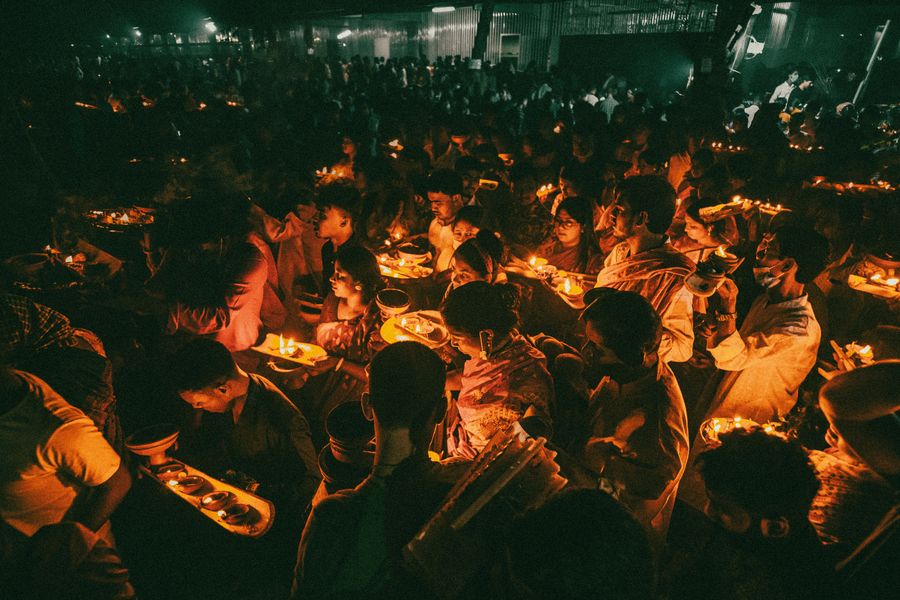
Before permanent markets and reliable roads, the practical way to buy a bullock, arrange a marriage or sell a season’s produce was to go where everyone else was going at a time everyone agreed on. A religious occasion at a known site supplied both the date and the place, and a fair grew around it.
That is the origin of most of the large melas still held across India, and it explains their structure. Pilgrimage and ritual sit at the centre, trade occupies the ground around it, and entertainment fills the evenings, because a large number of people with money in a temporary town will always attract both.
Some of these gatherings are enormous, with livestock arriving from a wide radius, temporary accommodation, food, veterinary services, competitions and an entire apparatus of commerce assembled on open ground for a few days and dismantled afterwards.
The livestock trade is the working heart of many of them
At the cattle and camel fairs, the animals are the point. Sellers arrive days early, camp on the ground with their stock, and trading proceeds through a familiar routine of inspection, negotiation and eventual agreement, with intermediaries who know both parties playing a substantial role.
This trade has changed considerably, and in several well-known fairs the number of animals traded has fallen while the number of visitors has risen. Mechanisation has reduced demand for draught animals, regulation has altered what can be traded and where, and the commercial core of some fairs is smaller than it was.
The consequence is a shift in what these events are. Where the trade shrinks and the audience grows, the fair drifts towards being a cultural show, with organised programmes and arrangements aimed at visitors. That transition is well advanced at some sites and barely begun at others.
The visitor economy sits alongside the original one
At the better-known fairs, tented accommodation is set up for visitors, sometimes to a high standard, and it is booked long in advance. Prices in the surrounding town rise steeply for the duration, and transport to the site is heavily loaded on the main days.
None of that is a criticism. The money supports the event and the region, and a well-run tented camp is a comfortable way to attend something that otherwise involves sleeping on the ground. It does mean the experience is a curated one, at some distance from what the traders are doing.
The interesting part is usually earlier. Arriving before the main days, when the animals are coming in and the ground is filling up, gives a much better sense of the fair as a working event than the peak, when the programme and the crowd dominate everything.
Smaller fairs are everywhere and almost unvisited
For every famous mela there are hundreds of local ones held at temples and river sites across the country, drawing people from a few districts rather than from everywhere, with no visitor infrastructure and no listing in anything a traveller would read.
They are frequently the more rewarding thing to stumble into, precisely because nothing about them has been arranged for an audience. What they lack is any provision for outsiders, so getting to one and finding somewhere to stay is a matter of local transport and local hospitality.
Finding them requires asking rather than searching, since the dates come from a regional calendar and are known locally rather than published widely. Anyone in the area will know when the local fair is, and that conversation is usually more productive than any amount of preparation from a distance.
Attending one without getting in the way
A working fair is a business environment. People are there to trade, to arrange things and to meet relatives, and a negotiation over an animal is not a performance. Watching from a reasonable distance is fine; standing in the middle of it with a camera is a different matter.
Photographing people, and especially photographing them closely, deserves the courtesy of asking. This is not a rule imposed from outside; it is what most people would want for themselves. A great many subjects will say yes and some will not, and both answers are equally acceptable.
Practical details vary by fair and change from year to year, including dates, ticketing for any organised programme, camping arrangements and access. These are set by the state or by the organisers, so they need looking up close to the time rather than being assumed from a previous year.
Common questions
Are the big fairs still real trading events?
To varying degrees. Livestock trading continues at several, though the numbers have fallen in many places as mechanisation and regulation have changed the market, while visitor numbers have risen. Some fairs are now mostly cultural events with a trading remnant at the edge.
When should I arrive?
Earlier than the main programme days, if the working side of the fair interests you. The ground fills gradually as traders and animals arrive, and those days show the event as it actually functions rather than as it is presented once the crowd and the schedule take over.
Is accommodation available on site?
At the well-known fairs, yes — tented camps are set up for the duration and range from basic to comfortable, and they book out well in advance. At smaller local fairs there is usually nothing arranged for visitors, and the nearest town is the practical option.
Reporter, Traveology
Radhika has written about states, hills, coast & islands for most of the last decade and is happiest when a piece answers the question completely.