Festivals
Ganesh Chaturthi ends with a city carrying its idols into the water
A ten-day festival built around household and neighbourhood images concludes in immersion processions that dominate Mumbai and Pune for days, and the environmental argument around it is unresolved.
By Nadia Haddad3 min read

The festival is domestic and public at the same time
Ganesh Chaturthi is observed in homes across Maharashtra and well beyond it, with an image of the deity installed in the house for a fixed number of days, worshipped daily and then taken to water and immersed. That domestic version is the older and more widespread form of the festival.
Alongside it runs the public version, in which neighbourhood associations install large images in temporary pavilions on the street, funded by local subscription and open to everyone. Some of these pavilions are elaborate and famous, drawing queues that run for hours.
The public form as it is now practised is generally traced to a deliberate late nineteenth-century effort to turn a household observance into a mass public one, in a colonial context where public assembly had political significance. The historical detail is argued over by historians, but the shape of the result is not in question — the street festival is a modern institution built on an old rite.
Immersion happens on several different days
A common misunderstanding is that the whole festival ends at once. It doesn’t. Households immerse their images after a period they choose — some after a day and a half, some after five days, some after seven, and the large public installations typically on the tenth.
That staggering spreads the disruption across more than a week rather than concentrating it in a single evening, and it means several distinct nights of processions in the big Maharashtrian cities. The final day is the largest by a wide margin.
For anyone in Mumbai or Pune during the festival, this is the practical fact that matters. Roads close along the immersion routes, traffic is diverted at short notice, and journeys that ordinarily take half an hour become unpredictable. The disruption is announced locally as it happens rather than being knowable well in advance.
The processions are the event
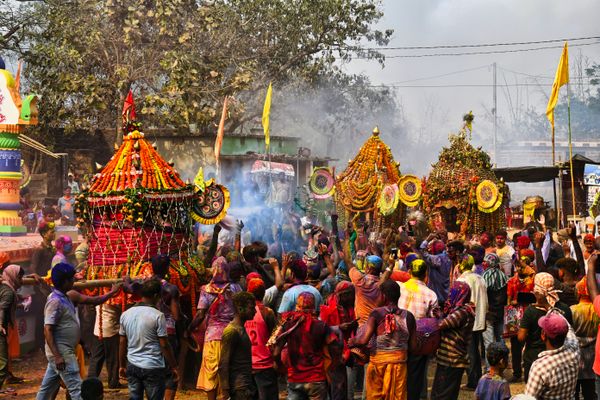
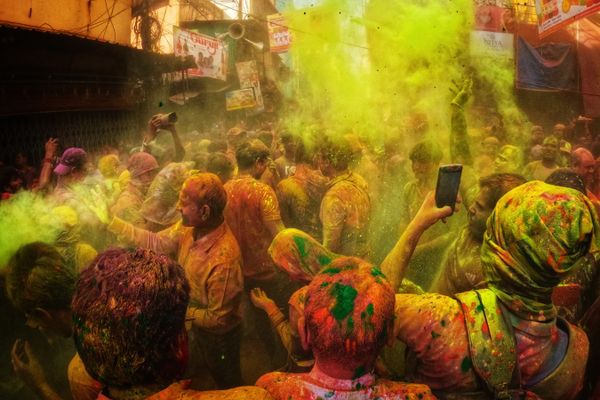
An immersion procession moves slowly through the streets with drums, dancing and very large numbers of people accompanying the image to the water. In Mumbai the destination is often the sea itself, which is why the beaches on the final night are the focal point of the entire festival.
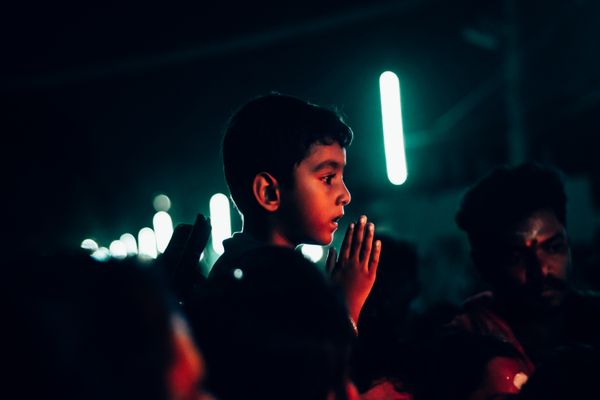
This is a good-natured crowd rather than a solemn one, and visitors are generally welcomed rather than tolerated. It is also an extremely dense crowd with heavy objects moving through it in the dark, frequently in rain, since the festival falls within the monsoon season on that coast.
The sensible precautions are the ones that apply to any large procession. Watch from the edge rather than the middle, keep an exit behind you, keep valuables secured, and be realistic about how long it will take to get anywhere afterwards. Public transport in the affected areas is at its most crowded on those nights.
The environmental argument is real and unfinished
Immersing large numbers of images made from plaster of Paris and painted with synthetic colours has measurable effects on the water bodies that receive them, and the issue has been the subject of regulation, court attention and campaigning for years.
Responses have included promotion of clay images, artificial immersion tanks provided by municipalities so that images do not go into natural water bodies, restrictions on materials and organised collection afterwards. Uptake varies considerably, and so does enforcement.
There is genuine disagreement here rather than a settled answer. Some argue the regulation is necessary and overdue; others see restrictions on religious practice as unfairly targeted when other sources of pollution are larger. Both positions are held sincerely, and the current legal position varies by state and changes, so it needs checking rather than assuming.
If you want to see it, decide which version
The neighbourhood pavilions during the middle days of the festival are the calm way to experience it. You can walk between them, look at the images and the decoration, and see how each association has interpreted the year’s theme, without being inside a procession at all.
The immersion nights are the intense version, and the final one especially. If that is the object, go with a local, go early, and accept that the evening will not follow a plan.
Dates shift with the lunisolar calendar, and the specific arrangements — routes, closures, artificial tanks, timing — are set by municipal authorities each year. The mechanism stays the same from year to year, but the details of any particular festival are local and current information.
Common questions
Is it acceptable for visitors to watch or join a procession?
Watching is entirely normal and visitors are generally made welcome. Joining the procession is often possible if you are invited, and less advisable uninvited in a dense crowd where the people around you are managing a heavy image. Follow the lead of whoever you are with.
Which city is best for seeing the festival?
Mumbai has the largest and most famous public installations and the biggest immersion nights; Pune has a strong tradition with its own established associations and is somewhat easier to move around. Both are in full swing, and smaller Maharashtrian towns offer a less overwhelming version of the same thing.
Are clay idols actually better for the water?
Unpainted clay disperses in water far more readily than plaster of Paris, and avoids the heavy metals present in some synthetic paints, which is the basis for their promotion by authorities and campaigners. The scale of the overall benefit depends on how widely they are adopted, and that varies.
Contributing editor, Traveology
Nadia writes about states, hills, coast & islands, mostly the parts other people skip and prefers a plain explanation to a clever one.