Trains & Permits
A night on a bus and a night on a train are not the same night
Both move you while you sleep, but the motion, the berth and the way each one handles a stop produce very different amounts of actual rest.
By Leela Fernandes4 min read
The motion is most of the difference
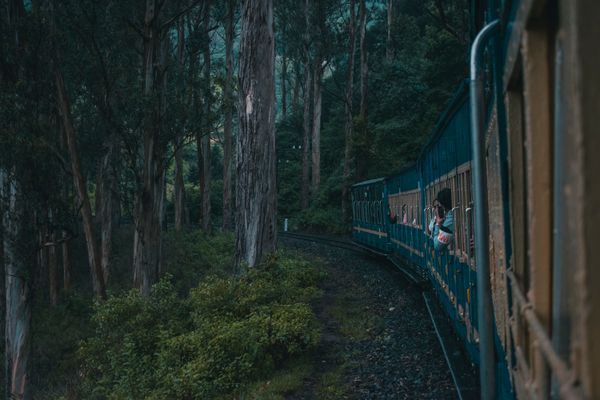
A train on a reasonable stretch of track produces a slow, regular side-to-side sway with a low-frequency rumble under it, and that combination is close to the conditions people find easy to fall asleep in. There is very little in it that demands attention.
A road vehicle produces something else entirely. Braking and acceleration happen constantly, corners load you sideways, potholes arrive without warning, and the horn is in use through the night because that is how overtaking works on an Indian highway. Each of those is a small arousal, and a night made of small arousals is not a night of sleep even if you were unconscious for most of it.
This is why people routinely report sleeping badly on an overnight bus and then insisting it was fine. It usually was fine; it simply wasn’t restful, and the difference shows up the following afternoon rather than at breakfast.
The berth on each is a different piece of furniture
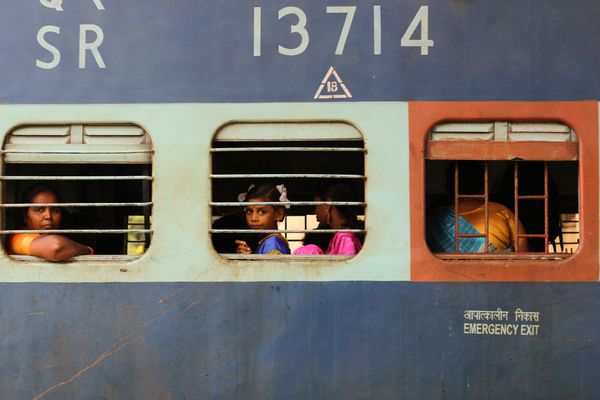
A train sleeping berth is a fixed platform in an open bay, wide enough to lie flat, with a window nearby and other people around you. Privacy is minimal, the aisle is public, and the compartment has a shared, slightly institutional quality that some travellers like a great deal and others cannot settle in.
A sleeper bus berth is an enclosed pod with a curtain, usually narrower, and available as single or double. It is more private and considerably more confined, there is nowhere to put your feet down, and once the vehicle is moving there is essentially no way to change your position or your mind.
Neither is better in the abstract. If you value being able to sit up, walk about and see out, the train wins easily. If you want a curtain between you and everyone else, the bus supplies that and the train does not.
What happens when you need to get up
On a train you simply get up. There are toilets at the end of every coach, water is available, and at a longer stop you can stand on the platform for a few minutes, which does a surprising amount of good on a long night.
On a bus you wait. Halts are at the driver’s discretion and typically at roadside establishments at intervals through the night, and there is no facility on board on most services. That is workable if you are well, and genuinely unpleasant if you are not, which is worth weighing if anybody in the party has a stomach upset or a medical reason to move regularly.
The halt itself is an interruption for everyone. Lights come on, people get out, doors open, and the bus leaves when the driver decides it leaves. Sleeping through it is possible and not common.
Arrival is where the two diverge most
A bus can put you down close to where you are going, including at places with no railway at all, and that flexibility is the strongest argument for it. What it also does is arrive at whatever hour the road allowed, frequently before dawn, sometimes on the highway outside town rather than at a stand.
Being deposited at four in the morning on the edge of an unfamiliar town, with luggage, is the part of overnight bus travel nobody advertises. It is manageable with a plan — a booked room that knows you are coming, a rough idea of the distance in, a willingness to wait somewhere until light — and it is unpleasant without one.
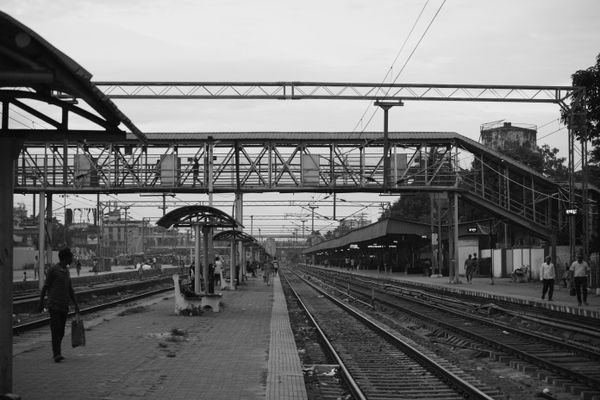
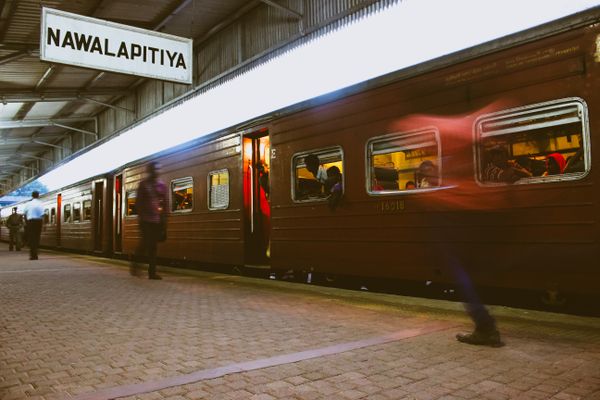
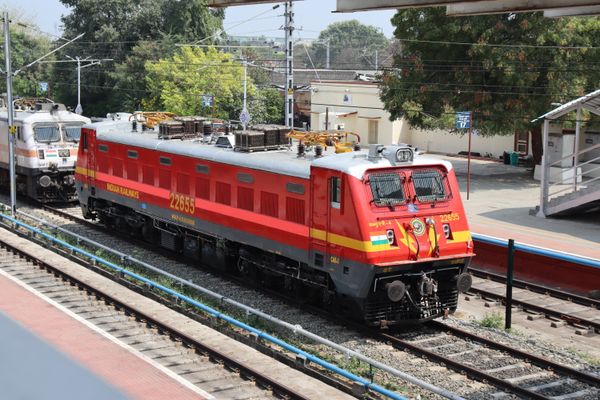
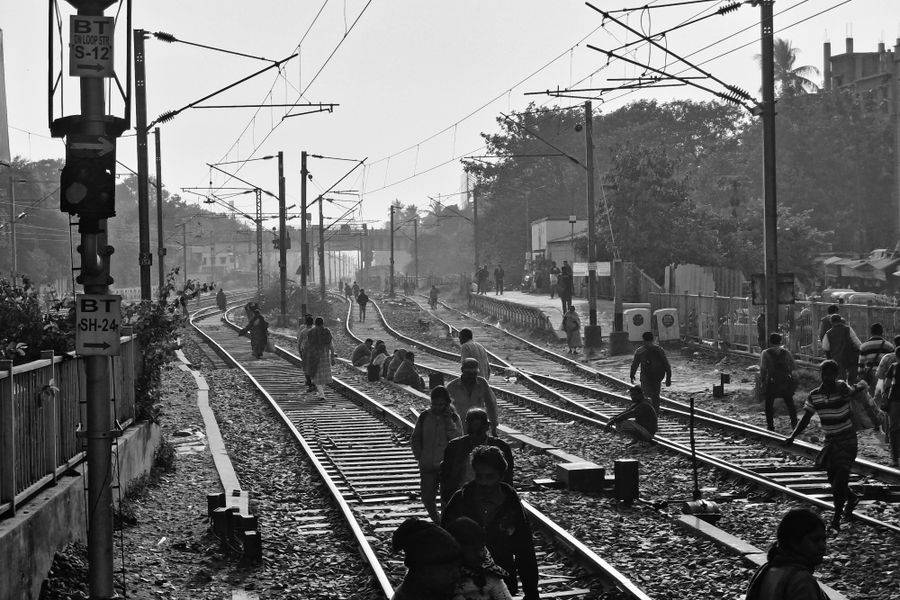
A train arrives at a station, which is a place designed for people who are waiting. There will be a waiting room, usually a retiring facility of some kind, staff, light and other passengers, so an inconvenient arrival hour is a much softer problem.
Choosing for a specific leg
Where a train exists on the route and a berth is available, it is usually the better night, and the case gets stronger the longer the journey is. Where the railway does not go — most hill routes, a great many district connections, a lot of the Northeast — the question does not arise, and the overnight bus is simply the way people travel.
A few specifics tilt the decision. Motion sickness is far more likely on a winding road than on rails, and a night bus on a ghat section is the worst combination of the two. Anyone travelling alone who prefers being visible to being enclosed tends to be more comfortable in a train coach than behind a curtain.
Luggage is the last consideration. On a train your bags stay with you and can be chained to a fitting; on a bus they usually go into a hold you cannot reach until the end. Neither arrangement is unsafe as a rule, but they call for different habits, and valuables belong on your person in both.
Common questions
Which is more comfortable for a very long journey?
The train, for almost everyone, once the journey passes about ten hours. Being able to stand, walk, use a toilet and buy tea changes a long night completely, and the accumulated fatigue after two consecutive nights on the road is markedly worse than after two on rails.
Are sleeper buses safe for solo women travellers?
Many women travel this way routinely, and operators on busy routes generally handle seating sensibly, with some services allowing berth preferences at booking. The considerations that matter are the arrival time and place rather than the vehicle, so choose a service that arrives in daylight where you can.
Can you book a bus berth and a train berth as a fallback for the same night?
People do, and the sensible version is to hold whichever booking has a workable cancellation position and release it as soon as the other confirms. Cancellation rules for railway tickets and for private bus operators are different from each other and change, so check the current terms rather than assuming.
Features writer, Traveology
Leela writes about states, hills, coast & islands, mostly the parts other people skip and is happiest when a piece answers the question completely.