Coast & Islands
The sea breeze is why a coastal afternoon is bearable and an inland one is not
Land heats faster than water, and the circulation that difference creates arrives on the shore in the middle of the day and reverses overnight, shaping everything from fishing hours to where the humidity sits.
By Sofia Almeida3 min read
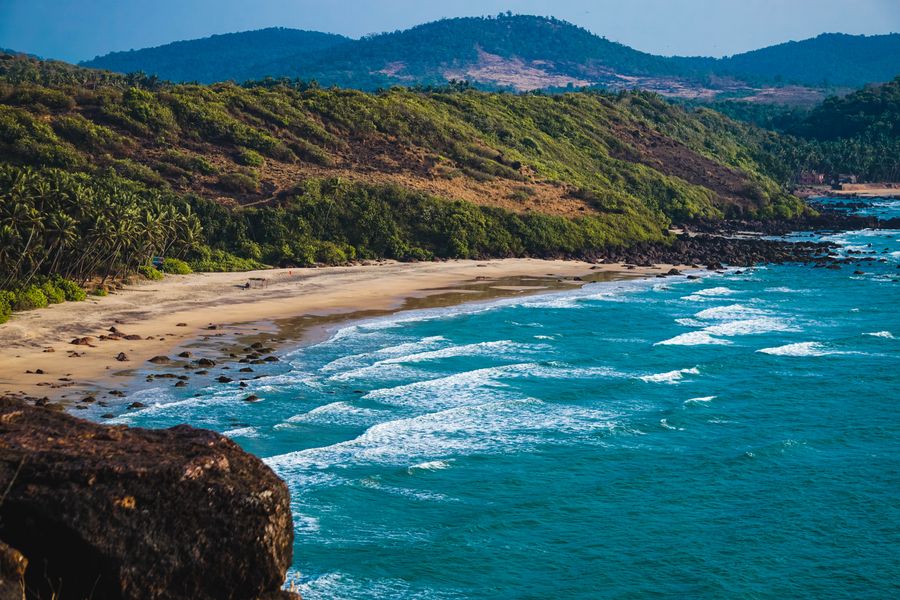
Water is slow to heat and slow to cool
Put the same sunlight onto a dry field and onto the sea, and the field warms rapidly while the sea barely changes. Water has an enormous capacity for heat, it mixes downward, and it loses energy to evaporation — three reasons the sea surface stays close to the same temperature all day.
The land does none of that. It heats through the morning, radiates that heat into the air just above it and creates a column of warmer, less dense air over the shore while the air above the water stays comparatively cool and heavy.
Air moves from high pressure to low, and that difference sets up a circulation: cooler air flowing in from the sea at surface level, rising over the heated land, returning seaward higher up. This is the sea breeze, and on a clear day it is nearly as regular as a clock.
It arrives late morning and dies in the evening
The breeze needs the temperature contrast to build, so it typically begins some hours after sunrise, strengthens through the early afternoon and reaches its peak in the hottest part of the day — which is precisely why the coast is more tolerable in the afternoon than the interior.
The front where it pushes inland is a real boundary and it advances during the day, sometimes tens of kilometres from the shore. People who live a short distance inland know exactly when the air changes, and it is often the difference between a still, heavy afternoon and a moving one.
After sunset the land cools faster than the sea and the whole system reverses, weakly. The land breeze that results is gentler than its daytime counterpart and blows offshore in the small hours, which traditionally was how fishing craft left the shore before engines made the question academic.
Cooler isn’t the same as more comfortable
The air the sea breeze delivers is cool and it is also saturated with moisture, and that is the coastal trade. Inland heat is higher on the thermometer but the sweat evaporates; coastal heat is lower and it sits on you, because the air already holds a great deal of water and can’t readily take more.
This is why the discomfort index on the Indian coast can be brutal at temperatures that sound mild, and why the pre-monsoon weeks in Chennai, Kochi or Mumbai are harder work than a higher figure in the dry interior. The number in a forecast is only half the information.
It also explains why the moving air matters so much. In humid conditions, wind across the skin is doing the evaporating that still air cannot, so a shaded verandah facing the sea is genuinely a different climate from a courtyard fifty metres behind it. Coastal architecture has known this for a long time.
The monsoon overrides the whole system
The daily sea breeze is a fair-weather phenomenon that needs strong sunshine and light background winds to establish itself. During the monsoon, when a powerful regional flow is already blowing onshore and cloud is cutting the heating, the local circulation is simply swamped.
That is one reason the wet months feel so different from the dry ones on the coast beyond the obvious matter of rain. The reliable rhythm of a still morning, a breezy afternoon and a calm evening disappears into a constant wind and a sky that doesn’t change.
It returns as the season withdraws, and the clear post-monsoon weeks are when the cycle is at its most textbook — flat sea in the morning, breeze building by noon, dropping again at dusk.
Planning a coastal day around the cycle
The practical use of all this is scheduling. Mornings are calm, which is when the water is flattest, when boats have the easiest ride and when photographs of a harbour come out best. Afternoons are windy, which is when the beach is cooler than the town and when small craft may be pitching.
Anything that depends on flat water — a small-boat crossing, snorkelling, a long swim — is easier before the breeze builds. Anything that depends on wind is the opposite, which is why sailing and kite sports on the Indian coast are afternoon activities.
And when choosing where to sleep, the orientation of a room matters more than its distance from the sand. A room open to the seaward side gets the afternoon and evening air; a room behind the building, or on the wrong side of a road with structures between it and the water, is sitting in the humidity without the compensation.
Common questions
Why does it feel hotter on the coast than the temperature suggests?
Humidity. Cooling depends on sweat evaporating, and evaporation slows sharply when the air is already close to saturated. A humid coastal day at a moderate temperature can be more physically taxing than a considerably hotter day in dry interior air.
Is the sea breeze reliable everywhere on the Indian coast?
It occurs wherever land meets a large body of water under strong sunshine, so it is broadly reliable in fair weather along both seaboards. Its strength and how far inland it reaches vary with the local topography, the season and whatever larger wind system is operating at the time.
When is the sea calmest for a boat trip?
Usually early morning, before the daytime circulation builds, in a fair-weather season. During the monsoon the sea state is governed by the regional flow rather than the daily cycle, and many small-boat operations stop entirely for those months.
Deputy editor, Traveology
Sofia writes the explanatory pieces on states, hills, coast & islands and reads the small print so you do not have to.