Coast & Islands
Turtles nest on Indian beaches in the dark, which is what makes lights a problem
Sea turtles come ashore on particular stretches of coast in the cooler months, and the hatchlings navigate to the sea using brightness, so a lit beach interferes with the whole cycle.
By Radhika Iyer3 min read
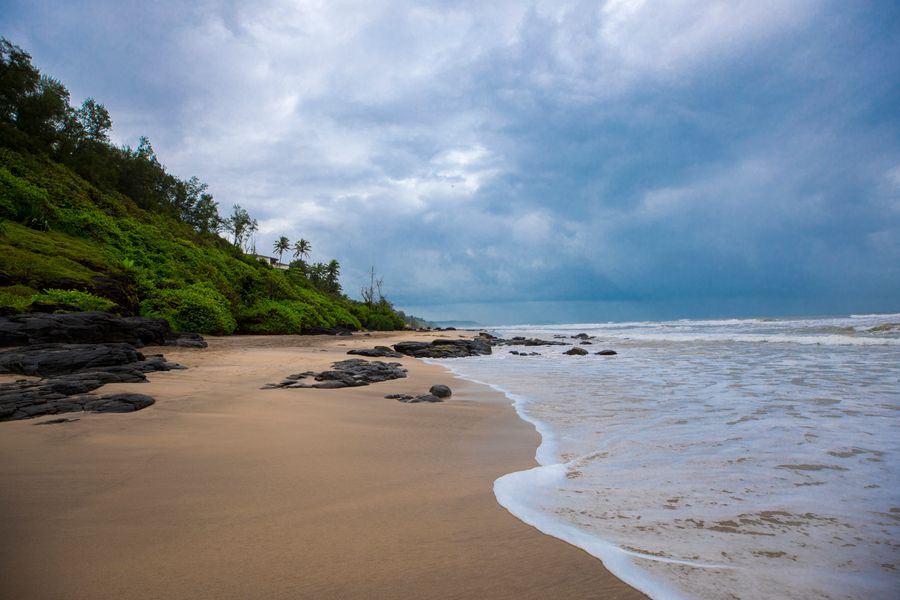
A nesting beach is a very specific piece of ground
Sea turtles spend nearly their entire lives at sea and come ashore only to lay. What they need from a beach is narrow: sand above the high water line, the right depth and temperature to incubate a clutch, and an approach the female can climb without obstruction.
Not many stretches of coast satisfy all of that, and the ones that do are used year after year. Several Indian coasts host nesting — the Odisha shoreline most famously, along with parts of Tamil Nadu, Andhra Pradesh, Kerala, Gujarat, the Andamans and Lakshadweep.
Olive ridley turtles are the species most associated with the mainland east coast. The islands host others, including green turtles and hawksbills, and the Andaman and Nicobar group is one of the places in the region where the much larger leatherback nests.
The mass nesting on the Odisha coast is a genuine phenomenon
Most sea turtles nest as individuals, spread across nights and beaches. Olive ridleys also do something else — an arribada, in which very large numbers of females come ashore over a small number of nights on the same stretch of sand.
The Odisha coast, including the Gahirmatha area and the mouths of rivers such as the Rushikulya, is one of the few places in the world where this occurs. It doesn’t happen on a fixed date, it doesn’t happen identically every year, and in some years the event at a given beach is far smaller than in others.
That unpredictability is the honest headline. Nesting is influenced by weather, sea state and cues that are not fully understood, so it cannot be booked in advance the way a festival can, and any operator implying otherwise is overselling.
Hatchlings navigate by brightness and that is the vulnerability
A clutch incubates in the sand and the hatchlings emerge, usually at night, and head for the sea. They find it by moving towards the brighter horizon, which over a natural beach is the open water reflecting the sky, and away from the darker, higher silhouette of the land behind them.
Artificial light breaks that cue completely. A lit road, a resort, a fishing jetty or a beach bar can be brighter than the sea, and hatchlings turn inland, exhaust themselves, dry out or are taken by predators before reaching the water. The mechanism is well established and it is the reason lighting restrictions exist near known nesting beaches.
The same applies to adult females coming ashore, who may turn back rather than nest on a beach that is brightly lit or busy. This is why nesting seasons come with local rules on lights, vehicles and beach access, and why those rules should be treated as substantive rather than decorative.
Fishing gear is the other main pressure
Adult turtles drown when they are caught in nets and cannot surface, and the waters off a mass nesting beach are exactly where large numbers of adults congregate before coming ashore. India has regulations covering fishing near these areas in the nesting period, including requirements around excluder devices on trawl nets.
Enforcement is difficult and the subject is contested, because the same waters are the livelihood of local fishing communities who did not create the problem and bear much of the cost of the restrictions. Presenting this as a simple conservation story would be misleading.
Alongside that sit the ordinary pressures: beach erosion, development, plastic debris that is eaten or entangles, and dogs and other predators taking eggs and hatchlings from unprotected nests. Hatcheries run by forest departments and local groups exist in several states to protect clutches from the worst of it.
Seeing it responsibly, if you can see it at all
Where visitor access is permitted, it is usually organised — through the forest department, an established local conservation group or a sanctioned guide — and it comes with rules about distance, torches, flash photography and where you may stand. Those rules are the price of admission and they are not negotiable.
The dates, permissions and access points vary by state and by year, and stretches of coast may be closed entirely during nesting. Anyone planning a trip around this needs to check the current position with the relevant state forest department rather than relying on a previous season’s account.
And it is worth going with adjusted expectations. Nesting happens at night, in the dark, without lighting, and it is slow. What you get is not a spectacle in the ordinary sense — it is the sound of a heavy animal on sand and, if the timing is kind, a great many of them at once.
Common questions
Can I plan a trip specifically to see mass nesting?
You can travel to the right coast in the right part of the year, but the event itself cannot be scheduled. It varies between years and between beaches, and it can be missed entirely. Treat it as a possibility within a broader trip rather than as the fixed centre of one.
Why are torches and flash discouraged on nesting beaches?
Because turtles orient by light. Hatchlings move towards the brightest horizon and artificial light draws them inland to their deaths, while adult females may abandon a nesting attempt on a lit beach. Where any light is used at all, guided operations generally restrict it tightly.
Do turtle hatcheries actually help?
They protect clutches from predation, poaching and tidal loss, and they are widely used in India by forest departments and local groups. Practice matters, though — nest handling, incubation temperature and the timing of release all affect outcomes, and standards vary between operations.
Reporter, Traveology
Radhika has written about states, hills, coast & islands for most of the last decade and is happiest when a piece answers the question completely.