Festivals
A masked dance at a Himalayan monastery is liturgy, not a show
The cham performances held at Buddhist monasteries across the Indian Himalaya are ritual acts with a doctrinal purpose, and the crowd in the courtyard is a congregation rather than an audience.
By Sofia Almeida3 min read
Cham is performed by monks as part of a religious observance
The masked dances staged in monastery courtyards in Ladakh, Spiti, Sikkim, Arunachal Pradesh and the Buddhist valleys between them are performed by monks who have trained for them, as part of a longer ritual programme that includes preparation and consecration not visible to visitors.
The purpose isn’t narrative entertainment. The dances enact the subjugation of obstacles and negative forces, and watching them is understood to confer benefit on those present, which is why entire villages attend and why people bring children and elderly relatives who will not follow the choreography at all.
The steps are prescribed and slow, the movement is weighted rather than acrobatic, and the accompaniment is monastic — long horns, cymbals, drums and shawms. It reads as ceremony to an outsider because it is ceremony.
The masks are specific beings
Each mask represents a particular figure from the tradition: protective deities, wrathful forms, teachers, and figures such as the skeletal lords of the charnel ground. They are not generic monsters, and the fearsome appearance of the wrathful ones is doctrinal rather than theatrical.
The masks themselves are heavy, made of papier-mâché or wood and painted, and the costumes are elaborate brocade. A monk performing in one has restricted vision, considerable weight on his head and shoulders, and is dancing at altitude, which is a fair part of why the pace is what it is.
A few figures are lighter in register, including comic characters who move among the crowd and keep the courtyard clear between sequences, and their presence is part of the design rather than an interruption of it. Some sequences involve a ritual effigy that is destroyed at the end of the cycle, and this act rather than any of the dancing is the climax of the whole programme. Visitors who leave when the dancing pauses frequently miss it.
The dates come from a calendar most Indian festivals do not use
Monastery festivals are set by the Tibetan lunar calendar, which is related to but not identical with the various Indian lunar calendars, so their positions in the Gregorian year move and cannot be worked out from an Indian festival list.
Different monasteries hold their festivals at different points in that calendar, and some of the best known fall in summer while others sit in the depth of winter. Losar, the new year, is a separate observance again and is largely a household and community occasion rather than a courtyard performance.
Some large monasteries hold their principal festival only in certain years by rotation, which is a detail that has caught out a good many travellers. Dates for any given year are announced by the monastery and by the state tourism authorities, and that announcement is what to plan against.
A monastery festival is also the year’s largest social event
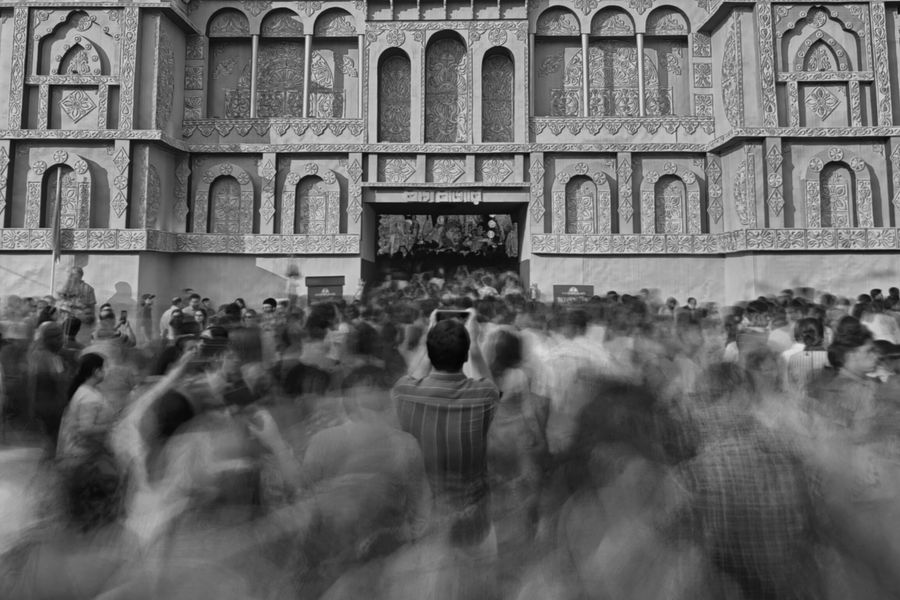
For the villages of a valley, the festival is the occasion when everyone comes: people arrive in their best clothes, families settle on the courtyard roofs and walls, traders set up stalls outside the gate, and business gets done in the margins.
That means the courtyard is crowded, and the good positions are taken very early by people who have a much better claim to them than a visitor does. Arriving at first light is normal, and arriving mid-morning means standing at the back.
It also means accommodation in the surrounding area is under pressure for those days, sometimes severely, in places with very little of it to begin with. This is the sort of thing that has to be arranged well ahead rather than on arrival.
Attending without being a problem
These sites are high, and the festivals held in winter are extremely cold; a courtyard at altitude in the shade before the sun clears the wall is not a place to be underdressed. Summer festivals bring intense sun instead, and several hours of it on stone.
Photography is usually permitted in the courtyard and rarely inside the temple halls, and the boundary between the two is not always signed. Ask. Never obstruct the dance area or the processional route, do not use flash into the performance, and if monks or attendants move people back, move.
The ordinary courtesies of a monastery apply throughout: shoes off in the halls, walk clockwise around shrines and stupas, keep noise down, and do not point cameras into ritual objects or at anybody engaged in prayer. Access arrangements and any charges differ by monastery and change, so check the current position for the one you intend to visit.
Common questions
Do you have to be Buddhist to attend?
No. These are public occasions and visitors are generally welcome to watch from the courtyard. What is expected is that you behave as you would in any place of worship during a service, which means not treating the space as a viewing gallery.
Are winter festivals worth the difficulty?
For some travellers, very much so, because the crowd is local rather than touristic and the atmosphere is quite different. The cost is real: severe cold, difficult road access and limited accommodation, and road conditions in those months can change plans at short notice.
Is the dance the same at every monastery?
The framework is shared and the details are not. Different traditions and different monasteries have their own sequences, masks and emphases, and a festival at one gompa will not be a repeat of a festival at another even within the same valley.
Deputy editor, Traveology
Sofia writes the explanatory pieces on states, hills, coast & islands and reads the small print so you do not have to.