Festivals
An urs is a death anniversary observed as a wedding
The annual commemorations at Sufi shrines mark the saint’s union with the divine rather than a bereavement, which explains the music, the scale of the gathering and the mixed crowd it draws.
By Radhika Iyer3 min read
The word itself explains the atmosphere
Urs derives from the sense of a wedding, and the anniversary of a Sufi saint’s death is understood in that tradition as the moment of union with the beloved — that is, with God. The commemoration is therefore celebratory rather than mournful, and anyone arriving expecting a solemn memorial has misread the event entirely.
The observance takes place at the dargah, the shrine built over the saint’s grave, and it follows the Islamic lunar calendar, which means the dates move steadily earlier through the seasons from year to year and cannot be predicted from a Gregorian date alone.
Dargahs exist across India, from Kashmir to the Deccan, and the largest of them draw pilgrims from across the country and from abroad. The urs at Ajmer in Rajasthan, at the shrine of Moinuddin Chishti, is the most widely attended.
These shrines have always drawn a mixed crowd
One of the distinctive features of dargah culture in India is that attendance has never been confined to Muslims. Hindus, Sikhs, Christians and others visit these shrines in substantial numbers, make offerings, tie threads and petition the saint, and this has been true for centuries rather than being a recent development.
That shared use is why the dargah occupies an unusual place in Indian religious life. It is not a neutral space in any secular sense — it is thoroughly a place of Muslim devotion — but it is one where the boundaries of practice have historically been porous in both directions.
It is worth saying that this position is not universally endorsed. Some strands of Islamic thought regard shrine veneration as improper, and the debate about it is old and continuing. A visitor should be aware that they are stepping into a contested religious landscape rather than an uncomplicated one.
Qawwali is devotional performance, not a concert
The music associated with these shrines is qawwali, performed by a group with a lead singer, supporting voices, harmonium and tabla, with the ensemble’s clapping carrying much of the rhythm. The repertoire draws on Persian, Urdu and regional poetry and the performance is structured to build over a long span.
At a shrine, qawwali is offered as devotion rather than presented as entertainment, and it is directed towards the saint and towards God. The audience is participating rather than watching, and the intensity in a shrine courtyard late at night is not comparable to a staged performance of the same music.
Several major dargahs have regular weekly qawwali as well as the annual urs, and the weekly session is often the better introduction. It is smaller, the courtyard is manageable, and there is space to sit and listen properly.
The urs itself is a very large gathering
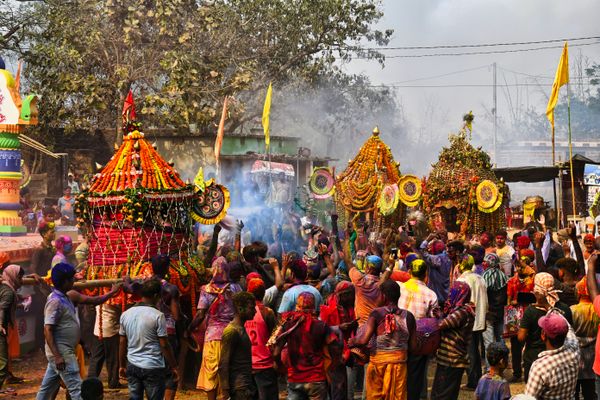
At the major shrines the annual observance brings enormous numbers of pilgrims into a town that is not built for them, over a period of several days. Accommodation fills completely, the lanes around the shrine become impassable, and traffic management in the whole town is reorganised.
The programme typically involves specific rituals on specific days, including ceremonial washing of the shrine and the offering of a ceremonial cloth, with the peak days drawing the densest crowds. Pilgrims often travel in groups, and processions arrive from other towns.
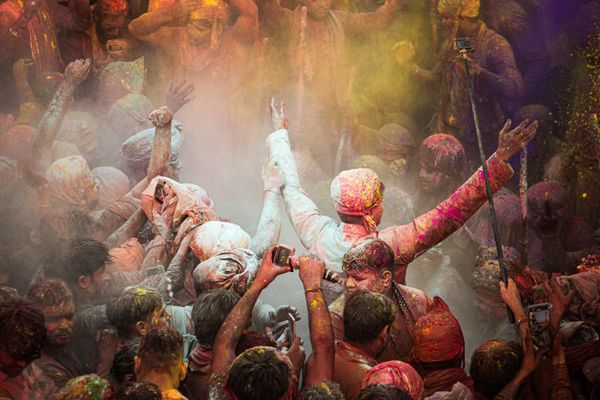
Anyone considering attending should know that the crowd density at the peak is extreme and that access to the inner shrine at those times may involve a long, tightly packed queue. Visiting the same shrine on an ordinary day is a completely different and much quieter experience.
Etiquette at a dargah is simple and expected
Footwear is removed before entering the shrine area and there is usually a place to leave it. Heads are generally covered by all visitors regardless of faith, and cloth is available at the entrance if you do not have anything. Dress modestly, with shoulders and legs covered.
Offerings of flowers, cloth and incense are sold outside and may be presented at the shrine. Nobody is obliged to make one. There will often be people seeking donations around the entrance, and it is entirely acceptable to decline politely and move on.
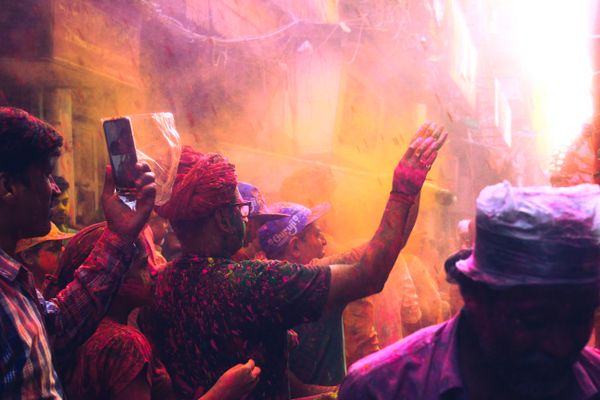
Photography inside the shrine may be restricted and, even where permitted, is often inappropriate at the moment of somebody’s devotion. Access arrangements, restrictions on which parts of a shrine particular visitors may enter, and the arrangements during the urs are set locally and change, so the position on the day is what counts.
Common questions
Can non-Muslims visit a dargah?
At most Indian dargahs, yes, and people of many faiths have visited them for centuries. Arrangements differ from shrine to shrine, and some restrict access to particular areas — for women in some cases — so it is worth observing what others are doing and asking at the entrance if unsure.
When does an urs take place?
On the anniversary of the saint’s death according to the Islamic lunar calendar, which shifts roughly eleven days earlier each Gregorian year. That means the same urs moves through the seasons over time, and the date has to be looked up for the specific year rather than remembered.
Is qawwali performed all year or only at the urs?
Many major shrines hold regular sessions, often weekly, in addition to the annual urs. The weekly performances are far less crowded and are generally a better setting to hear the music properly, since the urs itself brings crowd densities that make sustained listening difficult.
Reporter, Traveology
Radhika has written about states, hills, coast & islands for most of the last decade and is happiest when a piece answers the question completely.