Hills
A cold desert punishes you with sunshine and dryness rather than with cold
Ladakh and the high valleys beyond the main range get very little rain and very thin air, which changes what dehydrates you, what burns you and how quickly a warm afternoon becomes a freezing night.
By Manish Trivedi4 min read
Thin, dry air does not hold heat or block light
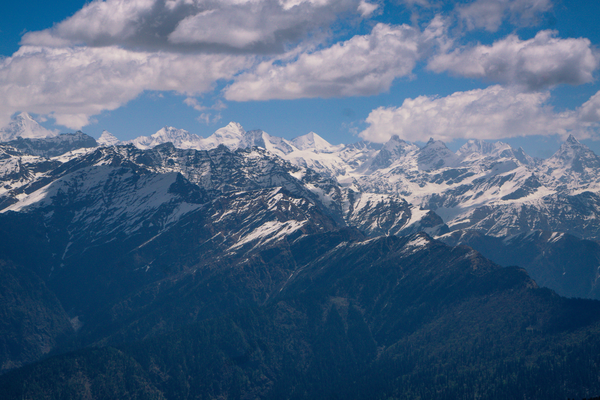
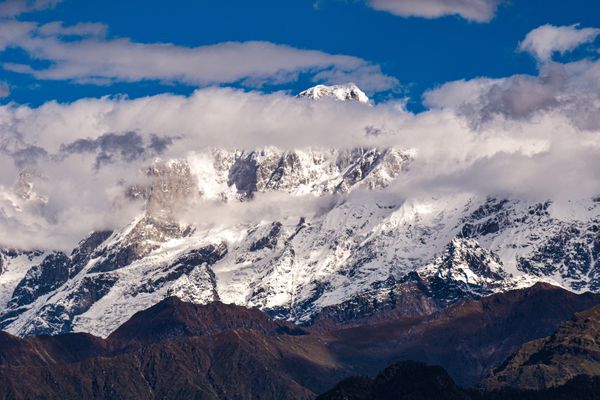
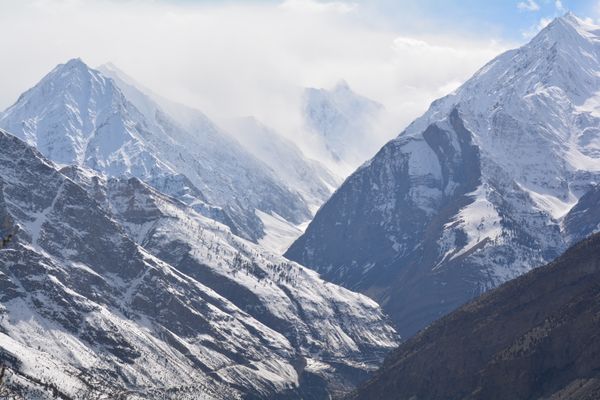
The high valleys north of the main Himalayan crest sit above three thousand metres and receive very little precipitation, because the range has already taken the moisture out of the air arriving from the south. What is left is a landscape of bare rock, gravel and irrigated green strips beside the rivers, and an atmosphere with much less in it than you are used to.
Two consequences follow immediately. There is less air overhead to scatter and absorb sunlight, so the sun is fierce in a way that has nothing to do with the air temperature. And there is almost no water vapour to trap outgoing heat after dark, so the ground sheds warmth to a clear sky the moment the sun leaves it.
The result is a daily temperature swing that people repeatedly underestimate because the daytime feels benign. You can be too warm in a shirt at midday in a valley and genuinely cold in the shade of a wall twenty metres away. The shade line is a temperature boundary here, not a matter of comfort.
Dehydration arrives without the usual warning signs
In dry air, sweat evaporates as fast as it forms, so the skin stays dry and the ordinary feeling of being sweaty and thirsty does not arrive. You are still losing fluid, and at altitude you are also losing it through breathing, since the body moves considerably more air per minute and every breath goes out saturated with moisture.
That combination is why fluid intake needs to be deliberate rather than responsive. Waiting until you feel thirsty is a poor system anywhere and a bad one here, and mild dehydration makes the ordinary discomforts of altitude noticeably worse than they need to be.
Alcohol and long drives both work against this, which is worth knowing on a trip built around long drives. None of this is medical advice, and anyone with a relevant condition or on medication should take proper guidance before going high. But the underlying physics is simple enough: dry air takes water out of you quietly.
Sun protection is a structural problem, not a cosmetic one
Ultraviolet exposure increases substantially with altitude, and in these valleys it is compounded by bare pale ground, by snow where there is any, and by long days spent outdoors with no natural shade of any kind. Trees exist only where somebody planted and watered them, which is to say in villages and nowhere else.
Sunburn at height happens faster than the ambient temperature suggests it should, and it happens in places people forget: under the chin from reflected light, on the ears, on the back of the hands on a steering wheel. A wide hat does more than a cap, and long sleeves do more than either.
Eyes deserve the same attention. Bright high-altitude light over reflective ground is hard on them, and on snow it is worse still. This is one of the few pieces of kit where a cheap substitute genuinely does not do the same job, and where the consequence of going without is a miserable evening.
Everything up here runs on a short logistical season
Cold-desert regions are supplied by roads that cross high passes, and those roads are shut for months at a time. Fuel, food, building material and most goods arrive during the open season and have to last, which is why prices are higher, why choice narrows the further from a main town you go, and why running out of something is a real possibility rather than an inconvenience.
Fuel deserves specific mention. Filling stations are far apart, occasionally out of stock and sometimes closed, so distance between them is a planning constraint on any road trip in the region. Drivers who work these routes carry spare fuel as a matter of routine, and they are not being dramatic about it.
Mobile coverage and electricity are similarly patchy once you leave the main valleys, with local restrictions on connectivity that vary and can change. Assume you will be out of contact for stretches, tell somebody your route, and do not rely on being able to look something up when you get there.
The landscape rewards a slower plan than most people bring
The distances between settlements are long, the roads are slow, and the altitude means the body is working harder at rest than it would at home. An itinerary drawn up on a map with sensible driving times will overrun, and the overrun tends to land at the end of the day when the cold is arriving.
The villages themselves are the interesting part, and they are organised entirely around water. Every green field in these valleys sits at the end of a channel bringing meltwater down from a glacier or a snowfield, and the whole of settled life here is a demonstration of what careful irrigation can do with almost no rainfall.
That system is also fragile, and visitor pressure on water in a place with none to spare is a genuine issue rather than a rhetorical one. Using less of it than you would at home is the single most useful courtesy available to anyone travelling in a cold desert.
Common questions
Is it colder than an ordinary Himalayan hill station?
At night, considerably, and for much more of the year. The difference is the swing rather than the average — daytime sun at these altitudes can feel warm even in cold months, and the same place a few hours later is well below freezing. Pack for the night, not for the afternoon.
How much water should be carried on a driving day?
More than seems necessary, because thirst is a poor guide in dry air at height and refill points are widely spaced. Carrying a refillable bottle and topping it up wherever you can is both more reliable and better for a region with a serious plastic waste problem.
When are the roads into these regions open?
Broadly the warmer months, but the actual opening and closing dates depend on snow clearance and are decided year by year by the authorities responsible for each road. They shift by weeks, so the current official position is the only version worth planning against.
Consumer editor, Traveology
Manish covers states, hills, coast & islands and the questions readers actually send in and reads the small print so you do not have to.