Hills
The eastern and western Himalaya are two different mountains to travel in
The same range is far wetter, steeper and more forested at its eastern end, which changes the season that works, the state of the roads and how much of the view you will actually see.
By Sofia Almeida4 min read
Rainfall increases sharply as you move east
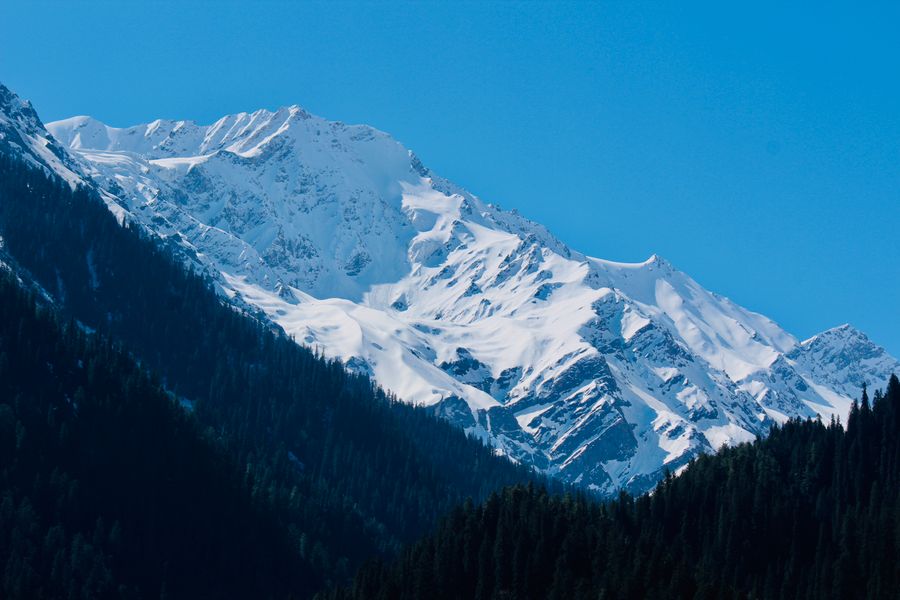
The Himalayan arc runs from the northwest of India round to the far northeast, and the monsoon does not treat both ends alike. Moist air arriving from the Bay of Bengal reaches the eastern hills first and delivers a great deal of its load there, so Sikkim, north Bengal and Arunachal receive far more rain than Himachal or Ladakh.
That difference shows in everything. The eastern hills are covered in dense wet forest to a considerable height, with bamboo, tree ferns and epiphytes that would be unimaginable in a Himachali valley. The western hills are drier, more open, and beyond the main crest they become genuine cold desert.
Snowfall follows a related but distinct pattern. Western disturbances arriving in winter bring the bulk of the snow to the northwest, which is why the western Himalaya has a more pronounced winter snow season while the east gets more of its precipitation as summer rain.
Steepness changes what a road can do
The eastern hills are younger-looking, more heavily dissected by rivers and generally steeper, with valleys that feel like slots rather than open basins. Roads there are cut into slopes at angles that leave very little margin, and the material above them is soil and weathered rock held together by vegetation.
Remove the vegetation, saturate the soil and the slope fails. That is why landslides are such a persistent feature of eastern hill travel, why the main routes into the region are closed and cleared repeatedly through the wet months, and why a road that was fine last week may not be fine today.
The western hills have their own version of this, particularly in the outer ranges, but the drier interior valleys are more stable ground. The characteristic western problem is snow closing high passes for months, which is predictable in a way that a landslide never is.
The good seasons do not coincide
In the western Himalaya the classic travelling season runs through the warm months when the passes are open, with the monsoon a nuisance in the outer hills and largely irrelevant beyond the crest. Autumn is excellent and short. Winter closes a great deal but opens the snow towns.
In the east the calculation is different. The monsoon is heavy and long, the shoulder weeks either side are unreliable, and the reliable windows are the clear stretch after the rain has withdrawn and the spring before it arrives. Spring in the eastern hills is also when the rhododendron and magnolia forests flower, which is a genuine reason to go then.
Cloud is the other consideration. The eastern hills spend a great deal of the year inside it, and visitors go to well-known viewpoints repeatedly without seeing the peaks at all. Anyone travelling there for mountain views should build in more days than seems necessary and treat a clear morning as luck.
Access and paperwork differ more than the scenery does
The eastern Himalaya includes frontier districts where entry is regulated, and the requirements are not uniform. Some areas need a permit for Indian citizens, some need a different one for foreign nationals, some are effectively closed, and the rules are revised periodically as border and security considerations change.
That has real consequences for planning, because a permit obtained in a state capital or at a district office takes time and sometimes requires a registered operator to sponsor it. It is not usually difficult, but it is not something to discover on the day you had intended to travel.
The western hills have their own restricted zones, particularly near the northern frontiers, with a comparable structure. In both cases the specifics belong to the current official position rather than to any article, and the position has changed more than once in recent years.
Getting there is a longer proposition in the east
The western hills are close to the northern plains and to a major airport hub, so a Himachali or Uttarakhandi valley can be reached in a night on a bus or an early flight and a drive. The infrastructure is thick, the options are many and a change of plan is usually recoverable.
The eastern hills sit at the far end of the country behind a narrow corridor of plains, and the journey to them is longer, more expensive and involves fewer alternatives. A missed connection matters more, because the next one may be the following day.
That does not argue against going east. It argues for allowing the journey the days it needs, and for not compressing a Sikkim or Arunachal trip into the same length of holiday that works comfortably in Himachal. The two ends of one range simply do not cost the same amount of time.
Common questions
Which end of the Himalaya is easier for a first visit?
The western hills, generally — they are quicker to reach from the northern plains, have denser tourist infrastructure and offer more fallback options when something goes wrong. The east is more rewarding for forest, flowers and quiet, and it demands more days.
Why is it so hard to see the peaks in the eastern hills?
Because there is far more moisture in the air, and cloud builds against the slopes for much of the year. Clear mountain views are concentrated in the drier months and in the early morning, and even then they are not guaranteed on any given day.
Do I need a permit for the eastern Himalayan states?
For some districts and some states, yes, and the requirement differs for Indian and foreign nationals. The rules are revised from time to time and vary by area, so check the current position with the relevant state authority well before travelling rather than at the border.
Deputy editor, Traveology
Sofia writes the explanatory pieces on states, hills, coast & islands and reads the small print so you do not have to.