Hills
Himalayan trekking has two seasons and they show you different mountains
The window before the monsoon and the window after it differ in snow, colour, visibility and cold, and choosing between them decides more about a trek than the route does.
By Leela Fernandes4 min read
The monsoon splits the walking year in half
Across most of the Indian Himalaya the trekking calendar is shaped by one interruption. The monsoon makes the wet flank of the range unsuitable for walking for roughly three months, leaving a window in spring before it arrives and a second window in autumn after it withdraws.
Those two windows aren’t equivalent, and treating them as interchangeable is the most common planning error in Indian trekking. They differ in snow cover, in what is flowering, in how far you can see and in how cold the nights get.
There is a third option that people forget, which is the monsoon itself in the rain-shadow valleys beyond the main range. Ladakh, Zanskar, Spiti and the upper Kinnaur country stay comparatively dry when everything south of them is drenched, and their season is precisely the months when the rest of the range is closed.
Spring is a snow season disguised as a flower season
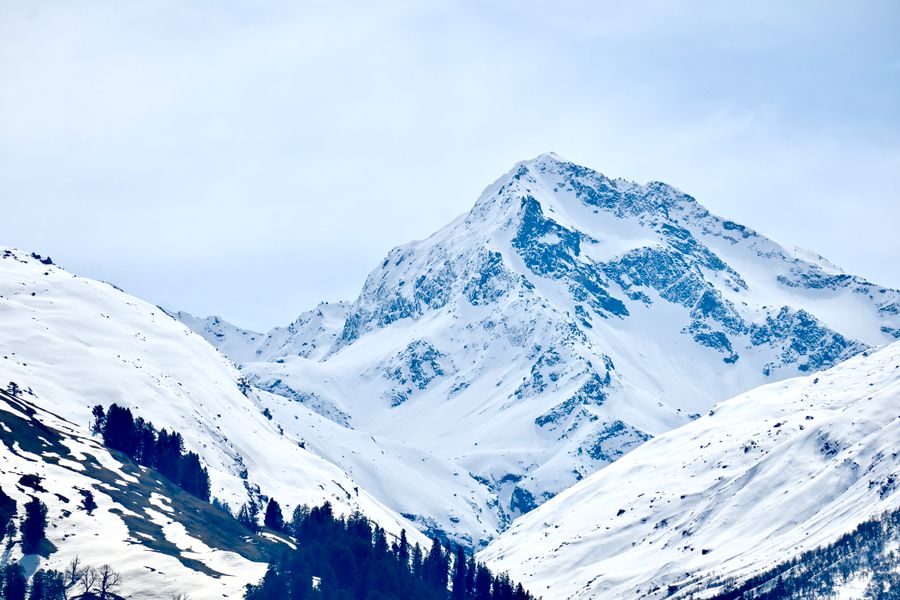
The pre-monsoon window opens when the winter snow begins to retreat, and how high it has retreated depends on the winter that preceded it. Early in the season a trek advertised as a moderate walk can involve substantial snow above the treeline, with route finding, cornices near ridge lines and cold camps.
As the weeks pass the snow line rises and the forests below it come into leaf. This is the rhododendron season in the middle Himalaya, and the oak and rhododendron belts of Uttarakhand, Himachal and Sikkim carry a great deal of colour for a few weeks. The alpine meadows follow later, greening and then flowering as the melt reaches them.
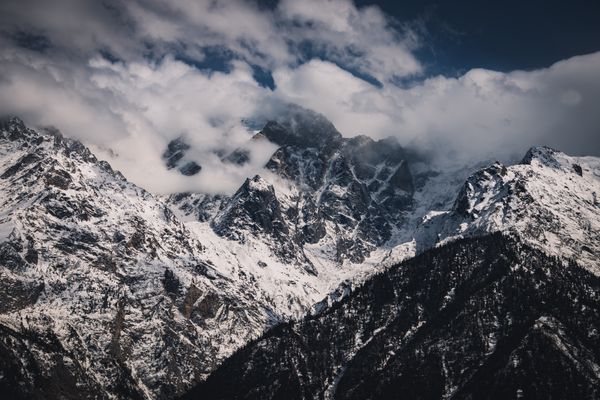
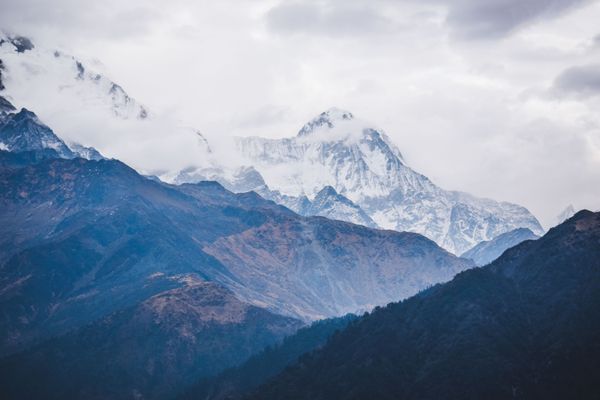
The trade-off is visibility. Spring air on the wet flank carries haze and, further into the season, the build-up of pre-monsoon cloud, so the long views to the high peaks are less reliable than they are in autumn. You get colour and you often give up clarity.
Autumn is a clear season and a colder one
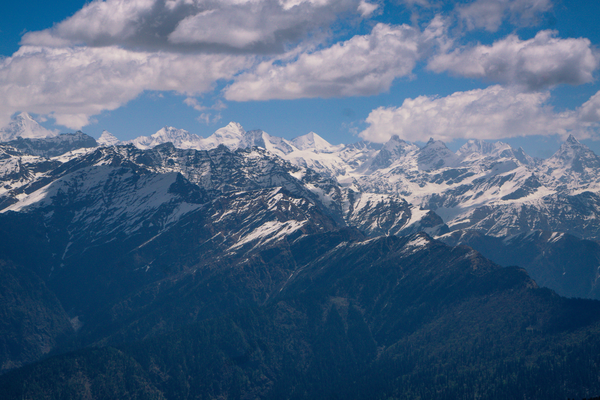
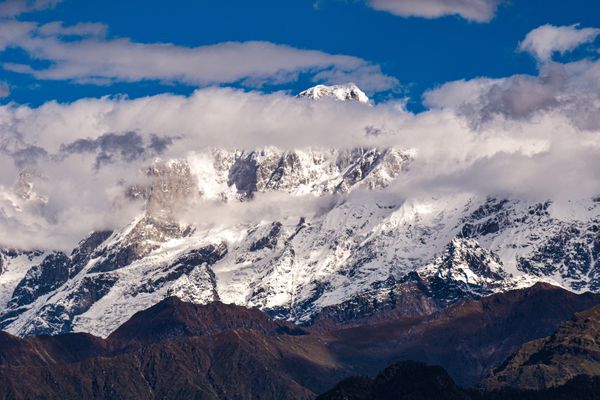
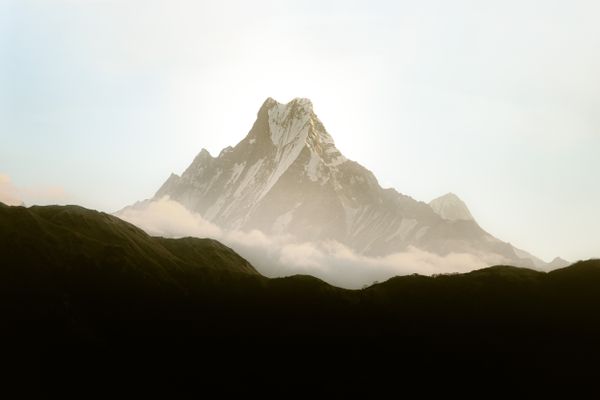
Once the monsoon withdraws, the atmosphere over the range is washed out and the air becomes exceptionally transparent. This is when the high peaks stand up sharply from a considerable distance, when photographs come out the way people imagine mountain photographs, and when a pass crossing gives you the whole horizon rather than a wall of cloud.
The ground is also more predictable. Snow from the previous winter has largely gone from the routes at trekking altitudes, streams have dropped from their monsoon peaks, and the paths — which take a beating in the rains — have been walked back into shape by shepherds and local traffic.
What autumn brings instead is cold that advances every week. Nights at camp drop steadily as the season progresses, water in bottles begins to freeze, and days shorten noticeably. The late part of the window is a genuinely cold-weather proposition, and it ends when the first serious snow arrives at height, which isn’t a fixed date.
Rain-shadow trekking is a different climate altogether
The high, dry valleys behind the main range are a summer destination for the same reason they are a difficult one. There is very little rain, the passes into them are open, and the walking is across arid, treeless country under an extremely strong sun.
That country makes different demands. Water sources are further apart and often glacial and silty; there is no shade at all; the altitudes are consistently high, so acclimatisation dominates the itinerary; and the daily temperature swing is enormous, with a hot afternoon and a freezing night in the same twenty-four hours.
It is also the only Himalayan trekking that is reliably available in July and August, which is why the season is busy despite the difficulty. Access is a separate problem, since it usually means a high road that has its own opening and closing dates.
Choosing a window honestly
If the trek is a first one, the middle of either window is the forgiving part — late in the spring season, when the snow has gone and the pre-monsoon cloud has not yet built, or early in the autumn one, when the air is clear and the nights are cold but not severe.
If the point of the trip is photography or a view of a specific peak, autumn is the stronger bet. If the point is meadows, forest and flowers, spring is. If you can only travel in the height of the monsoon, go behind the range rather than fighting it, and give the acclimatisation the days it needs.
Whatever the window, the operational details — permits for protected areas, whether a route requires a registered guide, forest department rules and access to trailheads — vary by state and change from year to year. Those need checking against the current official position each season, because the geography is stable and the administration isn’t.
Common questions
Which is safer, the spring window or the autumn one?
Neither is inherently safer; the hazards differ. Spring carries snow conditions, avalanche risk on some slopes and swollen melt streams later in the day. Autumn carries cold, shorter daylight and the possibility of an early snowfall at height. The bigger safety variable is the route and the operator, not the season.
Can I trek in the Himalaya during the monsoon?
On the wet flank it is a poor idea — leeches, cloud, slippery ground, landslides on access roads and no views. Behind the main range in the rain-shadow valleys it is the main season. The distinction is geographical rather than about toughness.
How far in advance should a trek be arranged?
Far enough to sort permits and acclimatisation properly rather than for availability alone. The popular routes do fill in peak weeks, but the more common problem is arriving with an itinerary that gains height too fast because the dates were squeezed. Build the schedule around acclimatisation first.
Features writer, Traveology
Leela writes about states, hills, coast & islands, mostly the parts other people skip and is happiest when a piece answers the question completely.