Hills
Snow on the ground and snow on the road are two different holidays
Winter hill travel in India divides between places where the snow is the attraction and places where it is an obstacle, and the physics of a cold road is what separates them.
By Manish Trivedi4 min read
Winter hill traffic in India is mostly snow tourism
A very large share of the people who go up into the Indian hills in winter are going specifically to see snow, often for the first time. That is a legitimate and cheerful reason to travel, and it shapes the entire winter economy of places like Manali, Shimla, Auli, Gulmarg and Dalhousie.
It also produces a particular failure mode. Snow isn’t evenly distributed with altitude and date; it falls in storms, melts, refreezes and is cleared. A town at fifteen hundred metres may have none in a season and a metre the following week, and no operator can promise it in advance.
The result is that thousands of vehicles converge on whichever point has snow, on the days after a fall, and the road to it becomes the story of the trip. This is worth understanding before booking anything that describes itself as a snow package.
The hazard is not the snow, it is what happens to it
Fresh snow on a road is comparatively manageable. The dangerous surface is what forms afterwards: snow that partially melts in afternoon sun and refreezes overnight into ice, sometimes as a thin transparent layer that looks like wet tarmac and offers almost no grip.
That is why the shaded side of a hill road is more dangerous than the sunny side, why the hazard is worst in the early morning and after dark, and why a stretch that was fine going up can be treacherous coming down two hours later. The temperature doesn’t have to be far below freezing for this to happen. It only has to cross the line once.
Tyres matter more than drivetrain here, which is the opposite of what most people assume. A four-wheel drive puts power to more wheels and doesn’t help at all with braking or steering on ice. Chains, where they are used, are the thing that actually changes the outcome.
Clearing a road is a continuous operation, not a one-off
The high roads are kept open by agencies with ploughs and blowers working through the season, and the work is repeated after every fall. Whether a particular stretch is open on a particular morning depends on when it last snowed, how much fell and whether the machinery has reached it.
Which means winter road status is genuinely a day-by-day matter, decided locally and announced locally. Police and administration issue advisories, sometimes stopping traffic beyond a barrier point until conditions improve. Those advisories are the source to follow, and they should be followed rather than argued with.
Beyond a certain altitude the answer is simply no. High passes close for the winter and reopen months later, and the valleys behind them are reached by air or not at all until the clearing is done. That is a separate matter from the ordinary snow-day closures lower down.
Being cold in a vehicle is the underrated risk
The common winter incident in the Indian hills is not a crash. It is a traffic jam — hundreds of vehicles stationary on a single-lane road because one car without grip could not make a gradient and nothing can pass it. Those jams have lasted many hours.
A stationary vehicle in the cold is a poor shelter once the engine is off, and running the engine for heat with snow around the exhaust is its own hazard. So the sensible winter kit for a day trip up a hill road is unglamorous: warm layers beyond what the day seems to need, water, food, a charged phone and a full tank.
The other half of it is timing. Go up early, come down before the light fails, and treat the afternoon as the deadline rather than the sunset. Every one of the compounding factors — refreezing surface, fading light, tired drivers, a jam that has been building all day — gets worse in the last two hours of daylight.
Some winter hill travel is not about snow at all
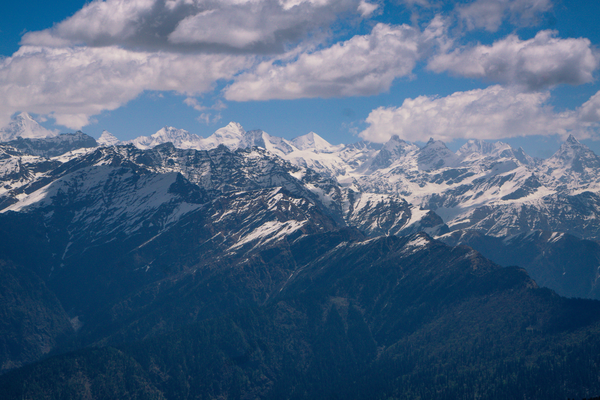
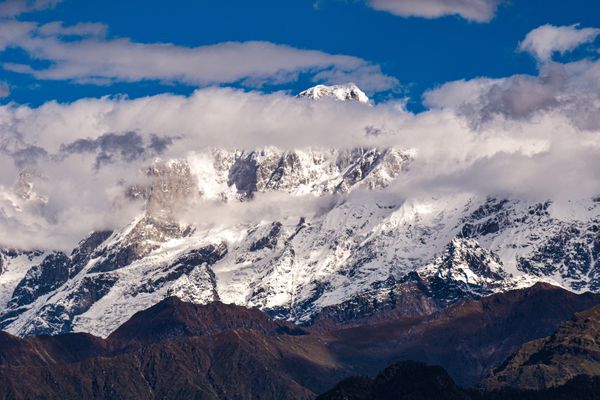
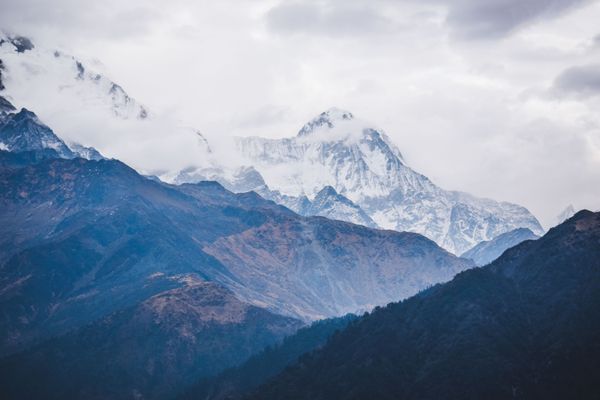
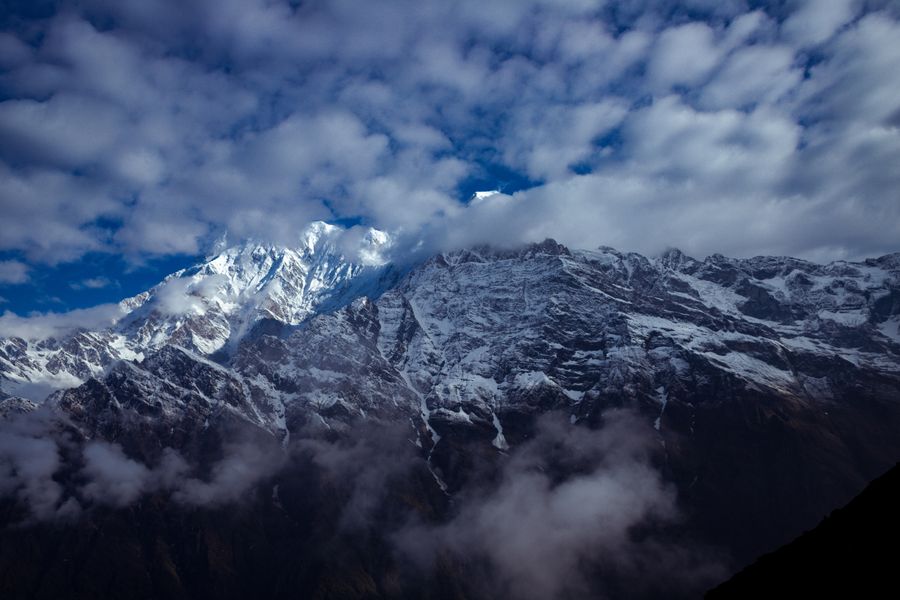
There is a quieter case for the hills in winter that has nothing to do with playing in snow. The air after the rains and through the cold months is often exceptionally clear, the high peaks are visible from viewpoints that show nothing in summer, and the towns are empty of the crowds that make them difficult in May.
For that trip you want a town low enough to be comfortable and open, high enough to see across, and reached by a road that does not depend on clearing. Plenty of places in Himachal, Uttarakhand, Sikkim and the Nilgiris fit, and they are pleasant precisely because nobody is trying to reach them for a snowball fight.
The two trips want different destinations and different dates, and confusing them is the source of most winter disappointment in the hills. Decide which one you are taking. The clear-air trip is the more reliable of the two, because clear air is far more predictable than a fresh fall of snow.
Common questions
Do I need a four-wheel drive to go up in winter?
It helps for getting moving on a snowy gradient, but it does nothing for stopping or steering on ice, which is where winter accidents come from. Tyre condition and chains matter more, and on many routes local operators run vehicles that are set up for the conditions — using one is usually wiser than taking your own.
Can anyone guarantee I will see snow?
No, and an operator who does is selling something they cannot control. Snowfall varies enormously between years and within a season. If snow is the sole purpose of the trip, travel in the deeper part of winter, keep the dates flexible and accept the possibility of an empty hillside.
Are the high passes ever crossable in winter?
The major high passes close and are reopened after clearing, which takes months, so for most of the winter the answer is no. Some valleys behind them are served by winter air links or by long detours. The reopening date moves by weeks from year to year and is announced by the clearing agencies, not scheduled in advance.
Consumer editor, Traveology
Manish covers states, hills, coast & islands and the questions readers actually send in and reads the small print so you do not have to.